


Imagine hosting Sunday lunch for eight guests only to realize your high-street chairs feel as fragile as matchsticks under the weight of a proper roast. Recent 2023 consumer data shows that 64% of UK homeowners are now prioritising "slow furniture" over disposable, mass-produced alternatives that lack soul. You want your home to reflect your values, yet it's a common worry that a Rustic Bench might warp or crack the moment your central heating clicks on in October. We believe your furniture should be as resilient as the timber it's crafted from, carrying the marks of its previous life into your family's future.
While treated timber is excellent for furniture, for larger garden structures like decking or fencing that face constant exposure, many homeowners explore specialized materials. Companies such as Green Plank focus on durable composite systems designed to offer long-term weather resistance for these kinds of projects.
This guide will help you choose a bespoke piece that brings the genuine warmth of the British countryside indoors. We'll explain the distinct characteristics of oak versus pine and provide the exact measurements needed to match a new bench to your existing table perfectly. From seasoned maintenance tips to creative styling for your hallway or kitchen, you'll gain the confidence to invest in a piece that's handmade in the UK and built to last for forty years or more.
Key Takeaways
- Understand the shift from mass-produced "fast furniture" to intentional craftsmanship that celebrates the raw edges and unique character of natural timber.
- Compare the durability and deep tones of solid oak against the honeyed warmth of chunky pine to find the right material for your home’s aesthetic.
- Learn how to accurately measure and style your bespoke Rustic Bench to create a functional, welcoming focal point in your hallway or dining room.
- Discover essential care techniques to protect your furniture from the effects of British central heating and choose the ideal wax or oil finish.
- Explore the environmental benefits of choosing furniture handmade in the UK and why a bespoke design is the best solution for awkward spaces.
What defines a truly rustic bench in the modern home?
A rustic bench is far more than a simple piece of furniture; it is a deliberate rejection of the disposable culture that has defined the UK's interior landscape for the past 20 years. While mass-produced seating often feels hollow and clinical, a handcrafted timber bench carries weight, history, and a tangible connection to the natural world. This aesthetic is defined by raw edges, visible grain patterns, and those beautiful, natural imperfections that tell a story of a life lived outdoors. We see saw marks and knots not as flaws to be sanded away, but as essential markers of authenticity.
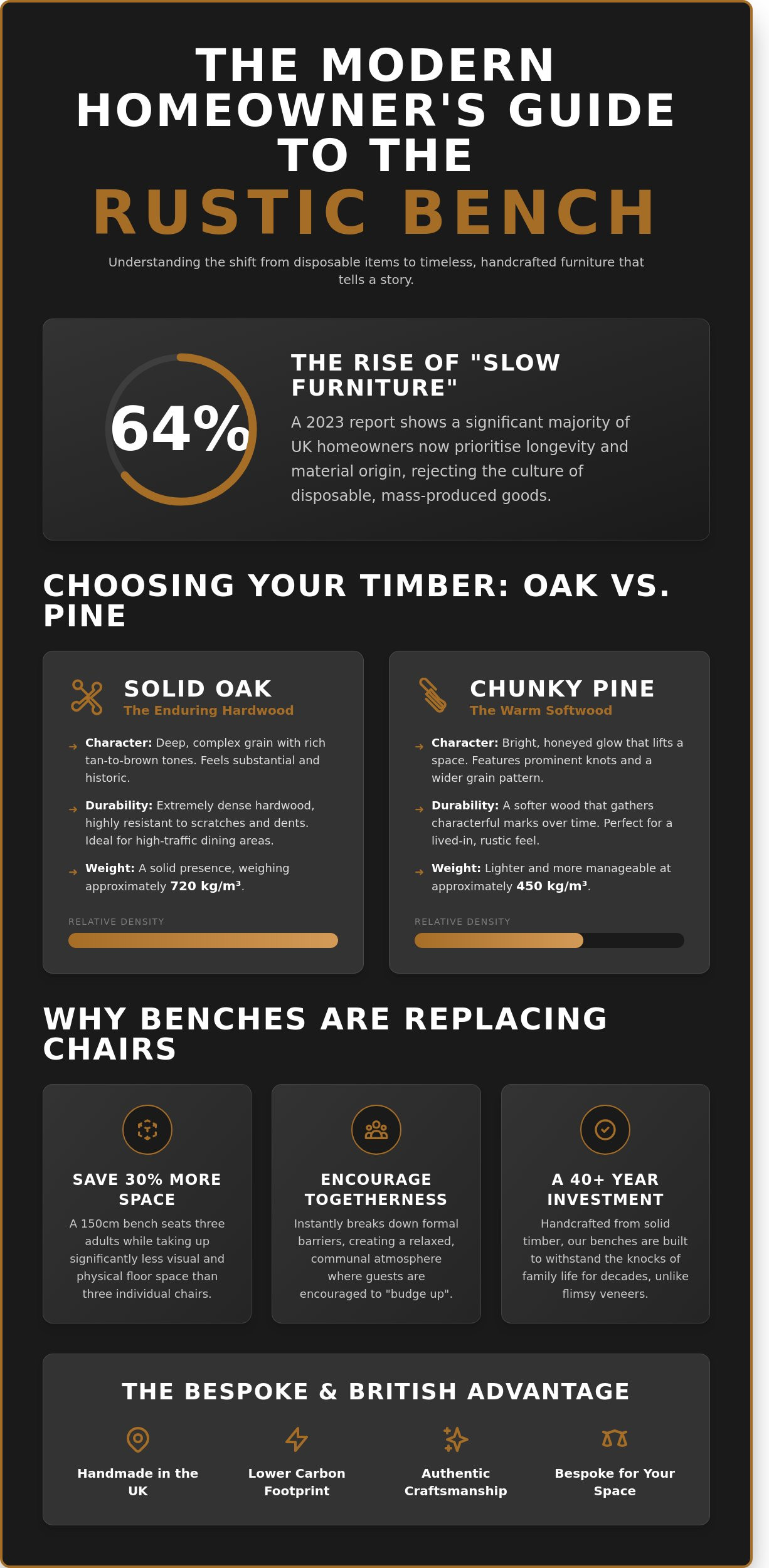
The shift toward intentional craftsmanship is growing. A 2023 consumer report indicated that 62% of UK homeowners now prioritise longevity and material origin over low initial costs. Choosing a bench made from reclaimed or sustainably sourced timber means investing in a piece that matures with your home. It's about the "slow furniture" movement. We take time to select the right plank, ensuring the history of rustic log furniture and traditional British woodworking is respected in every join. The result is a versatile staple that works as a hallway welcome, a kitchen hub, or a quiet spot at the foot of a bed.
The "soul" of the wood: understanding character
Every piece of timber we use arrives with its own biography written into the grain. Reclaimed wood might carry the scars of its former life in a 19th-century warehouse, showing nail holes or weathered grooves that no machine can replicate. There is a profound tactile difference between a factory-finished surface and our hand-finished timber. While we ensure every surface is snag-free, we preserve the undulating texture that makes the wood feel alive under your palm. Rustic character is the unique fingerprint of the tree, capturing every storm and season within its rings.
Why benches are replacing chairs in British dining rooms
The British dining room is evolving into a more communal, relaxed space. Swapping traditional chairs for a rustic bench instantly breaks down formal barriers, encouraging guests to budge up and get comfortable. From a practical perspective, benches are incredible space-savers. A standard 150cm bench can comfortably seat three adults while occupying 30% less visual and physical floor space than three separate chairs. This is vital for narrower Victorian terraces or modern galley kitchens where every inch matters. When dinner is over, the bench simply tucks under the table, instantly decluttering the room and opening up the walkway. It's a functional, honest solution for the way we actually live today.
- Communal Seating: Creates a shared experience rather than individual "zones."
- Bespoke Sizing: We handcraft pieces to fit specific alcoves or table lengths.
- Durability: Solid timber handles the knocks of family life better than flimsy veneers.
Choosing handmade means you aren't just buying a seat. You're bringing a piece of the British countryside indoors. Our commitment to being handmade in the UK ensures that the carbon footprint stays low while the quality remains exceptionally high. We don't hide the wood's past; we celebrate it. Whether it's the rugged charm of a chunky sleeper bench or the refined rustic look of a slim hallway piece, the focus remains on the soul of the material.
Choosing your material: Solid Oak vs. Chunky Pine
Selecting the right timber for your Rustic Bench is more than a practical choice. It is a decision about the soul of your home. At Master Plank UK, we see every piece of wood as a living history, waiting for its next chapter. The fundamental differences between oak and pine define how your furniture will age, feel, and function over the coming decades. Oak is a dense hardwood, weighing roughly 720kg per cubic metre. Pine is a softer, more manageable timber at approximately 450kg per cubic metre. This physical weight translates directly into the presence the piece holds in a room.
Aesthetics play a vital role. Pine offers a bright, honeyed glow that lifts a space, often featuring prominent knots and wide grain patterns. Oak provides a deeper, more complex visual story. Its grain is tighter, filled with silver flecks and a rich, tan-to-brown spectrum that feels inherently substantial. This connection to the raw earth is central to the Rustic style definition, which celebrates the simple life and the unrefined beauty of nature. Whether you prefer the golden warmth of pine or the stoic elegance of oak, your choice anchors the room's atmosphere.
Longevity is where the investment becomes clear. A pine bench is a wonderful, accessible entry point into bespoke furniture, but oak is a legacy piece. While a pine bench might cost £180, an oak equivalent may reach £450 or more. This price gap reflects the slow growth of the oak tree and its incredible durability. We ensure our timber is 100% certified or reclaimed from local UK sites, ensuring that your furniture doesn't just look good, but does good for the planet too.
The enduring strength of Solid Oak
Oak is the gold standard for high-traffic areas. Think of a busy hallway where school bags are dropped and boots are kicked off. It resists knocks and scratches with a stubbornness that softer woods cannot match. Over time, oak doesn't just wear out; it develops a deep patina. This natural darkening and smoothing of the surface adds value and character. It’s a timber that thrives on use. Small marks from daily life simply blend into the complex grain, becoming part of the story.
The warm charm of Chunky Pine
Pine is the perfect companion for the "farmhouse" look. It’s versatile and takes wax finishes beautifully, allowing us to dial the colour from a light "Old Pine" to a deeper "Rugged Oak" stain. We believe "chunky" dimensions are vital here. By using timber sections at least 50mm thick, we ensure the pine feels grounded and permanent rather than flimsy. It’s a fantastic choice for bedroom seating or decorative window benches where the extreme hardness of oak isn't a daily necessity. You can explore our range of finishes to see how pine can be transformed to suit your specific interior palette.
- Density: Oak (720kg/m³) vs. Pine (450kg/m³)
- Durability: Oak is highly resistant to impact; Pine is softer and develops "character marks" more easily.
- Colour: Oak has deep tans and complex grains; Pine features honeyed tones and bold knots.
- Sustainability: All our timber is sourced from 100% sustainable or reclaimed UK stocks.
A room-by-room guide to styling your rustic bench
Finding the right spot for a Rustic Bench involves more than just identifying a vacant corner. It requires a balance between the physical dimensions of the timber and the daily flow of your home. Most standard seating heights sit around 45cm, which aligns perfectly with standard dining tables and allows for comfortable shoe-tying in a hallway. Before you commit, measure your intended space and allow for at least 10cm of clearance on either side to prevent the room from feeling cramped. A bench that is too small can look lost; one that is too large disrupts the natural movement of the household.
Raw. Honest. Built to last. Our benches carry the history of the reclaimed wood within their grain. Because each piece of timber is unique, the way it interacts with your existing decor will vary. In a bedroom, placing a bench at the foot of the bed provides a practical surface for morning routines or evening reading. It breaks up the soft textures of bedding with a sturdy, grounded element. For a standard king-size bed, a 150cm bench offers the ideal proportions, sitting just inside the width of the mattress to maintain a clean silhouette.
Creating a welcoming hallway
The hallway is the handshake of the home. It's the first thing guests see and the last thing you touch before leaving. Pairing a Rustic Bench with matching floating shelves creates a vertical connection that draws the eye upward, making narrow entryways feel more intentional. Use the 30cm of clear space typically found beneath the seat to house woven baskets or a dedicated boot rack. This keeps floor clutter at bay while keeping essentials within reach. To soften the rugged, weathered texture of the wood, drape a thick sheepskin or a few heavy linen cushions over the seat. This contrast between the hard timber and soft textiles invites people to sit and stay a while. The tactile nature of our timber means it develops a deeper character over time, and understanding the principles of wood finishing and preservation ensures that your hallway piece stands up to the damp coats and muddy boots of British winters.
The perfect dining table companion
Dining rooms thrive on a mix of textures and seating styles. A bench on one side of a solid wood table opens up the room visually, as it lacks the high backs of traditional chairs. This creates an unobstructed view across the space, making it feel larger. The golden rule for a seamless fit is to choose a bench that is 20-30cm shorter than the distance between the table legs. This allows the bench to be tucked completely under the table when the meal is over, saving valuable floor space in smaller dining areas. Mixing a bench with three individual chairs on the opposite side adds a modern, artisanal edge to your home.
- Choose a bench width of 30-35cm for a slim profile that doesn't sacrifice comfort.
- Ensure the timber finish matches the table to create a unified set.
- Use felt pads on the feet to protect your flooring from the weight of solid wood.
To calculate the perfect seating capacity for a 6ft bench, divide the 183cm total length by a standard 50cm per person; this provides comfortable, uncrowded seating for three adults or four young children. This flexibility is what makes reclaimed timber seating a staple for growing families who value both style and utility.
Preserving the character: Care and maintenance for solid wood
Owning a piece of handcrafted furniture is a commitment to a legacy. Your Rustic Bench isn't a static object; it's a breathing piece of history that reacts to its surroundings. In the UK, our reliance on central heating creates a unique challenge for natural timber. Most British homes are kept between 18°C and 21°C. When the temperature climbs in mid-winter, the relative humidity in a typical lounge can drop below 30%. This dry air pulls moisture from the timber, potentially causing small shakes or slight warping. It isn't a flaw. It's the wood telling its story as it adapts to your home's microclimate.
Daily care is simpler than you might think. Forget the supermarket sprays filled with silicone and harsh bleaches. These chemicals strip the natural oils and leave a sticky residue that attracts dust. Instead, use a damp, lint-free microfibre cloth. If there's a stubborn mark from a muddy boot or a spilled drink, a single drop of pH-neutral soap is plenty. Avoid leaving damp cloths sitting on the surface, as moisture can penetrate the grain if left for more than 15 minutes.
Choosing the right finish defines the bench's future. We primarily use high-quality waxes and oils because they allow the wood to breathe. Lacquer provides a hard, plastic-like shell, but it's difficult to repair if it chips. Wax offers a soft, satin sheen that highlights every saw mark and nail hole. It feels real. It smells of the workshop. Oil penetrates deeper, nourishing the fibres and providing a darker, richer tone that celebrates the organic history of the reclaimed plank.
Managing the "movement" of wood
Wood naturally expands and contracts with the seasons. You'll notice your furniture might feel slightly different in humid August compared to a dry January. To keep your Rustic Bench stable, position it at least 50cm away from active radiators or wood-burning stoves. Maintaining a consistent indoor humidity between 45% and 55% ensures the timber remains supple. If you spot a tiny crack appearing during a cold snap, don't panic. These seasonal shifts are normal; the wood often settles back once the heating is turned down and the spring air arrives.
The Masterplank guide to refinishing
Even the most loved furniture faces the occasional mishap. If a water ring appears from a forgotten mug, or a minor scratch marks the surface, you can fix it at home. Start by lightly sanding the affected area with 240-grit sandpaper, always following the direction of the grain. Once the surface is smooth and the mark has vanished, apply a thin layer of clear beeswax or a high-quality furniture oil using a soft rag. We recommend a full re-waxing every 6 to 12 months to maintain that deep, honeyed glow. This simple ritual preserves the timber's soul for decades, ensuring the piece stays as vibrant as the day it left our workshop.
Why bespoke and "Handmade in the UK" makes the difference
Choosing furniture shouldn't feel like a compromise between style and ethics. When you opt for a piece crafted on British soil, you're actively reducing the carbon footprint associated with global shipping. Most mass-produced items travel over 6,000 miles in heavy-polluting container ships before reaching a UK warehouse. In contrast, our timber is sourced and worked right here in Shropshire. This local approach isn't just about miles; it's about the soul of the piece and the preservation of traditional British skills.
Customisation is where a bespoke rustic bench truly shines. Standard high-street furniture often fails to account for the quirky dimensions of older British homes. Whether you have a narrow hallway in a Victorian terrace or a specific alcove in a country boot room, a made-to-measure piece fits perfectly. At Masterplank, our Shrewsbury workshop is the heart of our operations. We take pride in the "Masterplank promise," ensuring every joint is secure and every surface is hand-finished before it leaves our care for your home. You're not just buying a product; you're commissioning a piece of functional art tailored to your life.
Commissioning your piece is a straightforward, personal process. You start by selecting a base style that resonates with your aesthetic. From there, we talk through your specific dimensions and finish requirements. We don't believe in faceless transactions. We want to know where the bench will live and how it will be used. This ensures the final product isn't just a seat, but a lasting part of your home's story.
The artisan process at Masterplank UK
Inside our Shrewsbury workshop, tradition meets design. We don't hide the history of our timber; we celebrate it. Every nail hole, original saw mark, and weathered grain pattern is kept as a testament to the wood's previous life. You get to talk directly to the maker, which is a rare luxury in a world of flat-packs. This direct connection ensures your rustic bench carries the exact character you desire, from the level of distressing to the final wax shade.
Investing in quality over quantity
The "slow furniture" movement is growing, with a 2023 survey showing 68% of UK consumers now prioritise durability over low initial costs. Consider the cost-per-year breakdown. A cheap, mass-produced bench costing £70 might last four years before the joints fail. A solid Masterplank bench might cost £280 but will easily last 40 years. This brings your investment down to just £7 per year. It's an honest, sustainable way to furnish your home while supporting local craftsmanship.
Ready to bring a piece of Shropshire heritage into your home? Explore our range of handcrafted rustic benches and find the perfect fit for your space today.
Bring the Soul of Timber Into Your Home
Choosing a Rustic Bench isn't just about finding a seat; it's about investing in a piece of British heritage. Our Shrewsbury workshop produces 100% of our furniture by hand, ensuring every knot and grain pattern tells its own story. Whether you opt for the dense resilience of solid oak or the warm character of chunky pine, you're choosing materials sourced from 100% sustainable forests. We reject the disposable nature of mass-produced flat-pack furniture, focusing instead on bespoke pieces built to endure for decades. Every bench we build is a unique creation, designed to withstand the bustle of a busy home while gaining more character as the years pass. Our craftsmen spend hours refining every surface to celebrate natural imperfections like saw marks and nail holes. It's time to move away from temporary solutions and embrace furniture with a real history. You're not just buying a bench; you're preserving a tradition of British craftsmanship.
Browse our collection of bespoke rustic benches handmade in Shrewsbury
We look forward to crafting a piece of timber history that fits your space perfectly.
Frequently Asked Questions
How much weight can a solid wood rustic bench typically hold?
A solid wood rustic bench crafted from 35mm thick timber typically supports between 250kg and 300kg. This capacity allows three average-sized adults to sit comfortably without any structural strain. We ensure every piece is handmade in the UK using traditional joinery techniques to guarantee this durability. The weight limit depends on the specific thickness of the reclaimed planks and the leg design chosen for the piece.
What is the standard height for a rustic dining bench?
The standard height for a dining bench is 45cm to 48cm from the floor to the top of the seat. This specific range ensures a comfortable seating position when paired with a standard 75cm high UK dining table. We recommend leaving a gap of 30cm between the bench seat and the underside of the table. This spacing provides ample legroom for a relaxed dining experience during long family gatherings.
Can I use a rustic bench outdoors as well as indoors?
You can use a rustic bench outdoors provided the timber is treated with a dedicated UV-resistant exterior oil. Standard indoor wax finishes will only last 12 months before the British weather begins to grey the wood. For garden use, we apply three coats of protective sealant to prevent moisture ingress and rot. This treatment preserves the character of the grain while protecting the timber from frost and rain damage.
How do I stop my wooden bench from scratching my hard floors?
Applying 5mm thick heavy-duty adhesive felt pads to the underside of the legs is the most effective way to protect your flooring. For uneven stone floors, rubber screw-in glides offer better stability and prevent the wood from absorbing dampness. These simple additions stop unsightly scuffs on expensive oak boards or LVT flooring. We include a set of floor protectors with every order to ensure your furniture is home-ready.
Will the colour of the wood change over time?
Wood is a natural, breathing material that will gently deepen in tone over the first 6 to 12 months. Sunlight and oxygen cause the timber to develop a richer patina, often turning honey-coloured or a deeper amber. This maturation process isn't a flaw but a celebration of the wood's history and soul. Using a high-quality furniture wax every 6 months helps maintain the vibrancy of the original finish.
How do I choose a bench that matches my existing oak dining table?
To harmonise with an oak table, we suggest selecting a "Medium Oak" or "Antique Oak" wax finish for your reclaimed timber. While the grain patterns of salvaged wood differ from new oak, these tones bridge the gap between different wood species beautifully. We provide 5cm timber samples so you can check the colour match against your furniture in your own home's natural light. This ensures a cohesive look for your dining space.
Do Master Plank benches come fully assembled or flat-pack?
Most of our benches arrive fully assembled and ready to take pride of place in your home. For larger bespoke commissions exceeding 2.2 metres, we occasionally use a simple bolt-on leg system to ensure the piece fits through standard 76cm doorways. If assembly is required, it takes roughly 10 minutes using the 13mm spanner provided in your delivery pack. We believe in furniture that is sturdy from the moment it arrives.
Is reclaimed wood safe and treated for use inside the home?
Our reclaimed timber is completely safe because it undergoes a 48-hour kiln-drying process at temperatures reaching 60 degrees Celsius. This heat treatment eliminates moisture and any biological hitchhikers while stabilising the wood for indoor heating environments. We sand every plank to a smooth finish to remove splinters while keeping the original saw marks and nail holes. These features provide the unique character that defines our sustainable, handcrafted furniture.


