


What if the shelves in your home were more than just flat surfaces, but a piece of British heritage that actually grew stronger with age? It's a common frustration to watch a mass-produced, veneer board begin to bow under the weight of a few hardbacks within just 12 months of purchase. You want a home that reflects your personality, yet finding furniture that balances authentic rustic charm with genuine structural integrity often feels like a gamble.
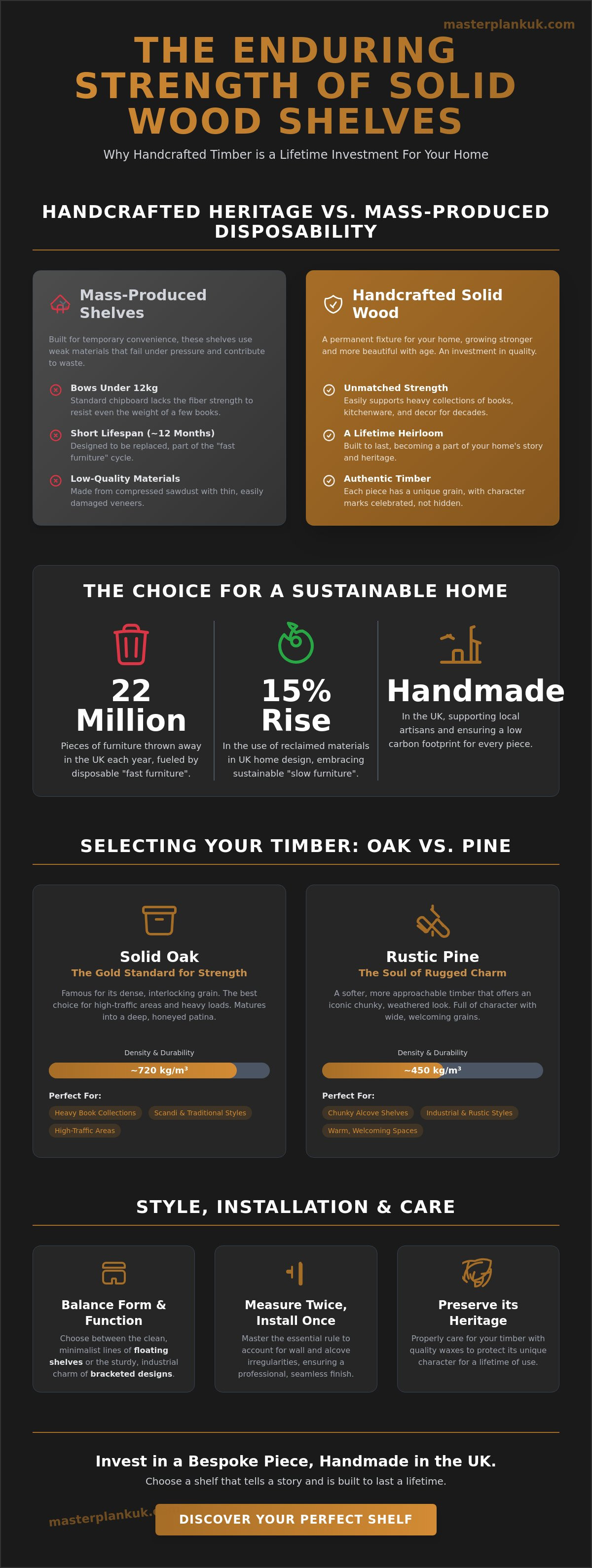
We believe you shouldn't have to choose between a beautiful aesthetic and a shelf that won't fail. This guide will show you how to select the perfect solid wood solution, focusing on the unique grain patterns and weathered textures that only handmade timber can provide. We'll cover everything from weight-bearing capacities for different wall types to the environmental benefits of choosing reclaimed materials, a practice that has seen a 15% rise in UK home design for 2026. By the end, you'll have the confidence to invest in a bespoke piece that's handmade in the UK and built to last a lifetime.
Key Takeaways
- Discover why solid timber, with its natural grain and enduring strength, far surpasses the lifespan and weight capacity of mass-produced alternatives.
- Identify whether the dense, prestigious grain of oak or the warm, rugged soul of rustic pine is the perfect match for your interior style.
- Decide between the clean, minimalist lines of floating shelves or the sturdy, industrial charm of bracketed designs to balance form and function.
- Master the essential "measure twice" rule to account for alcove irregularities and ensure a professional, seamless finish during installation.
- Learn how to properly care for your handcrafted timber to preserve its unique character and heritage for a lifetime of use.
The Case for Handcrafted Wooden Shelves Over Mass-Produced Alternatives
Choosing the right storage isn't just about finding a place for books. It's about investing in the fabric of your home. Solid timber provides a structural integrity that veneered MDF simply can't match. While a standard chipboard unit might begin to bow under 12kg of weight, a thick piece of reclaimed pine or oak remains steadfast for decades. This longevity transforms a simple shelf into an heirloom. It's the difference between a temporary fix and a permanent fixture.
Every piece of wood we touch has its own thumbprint. The grain patterns and knots aren't just details; they're the "soul" of the timber. No two shelves are ever identical. This uniqueness doesn't just look better; it adds tangible value to a property. According to UK interior design trends for 2026, bespoke wooden features can increase a room's perceived value significantly compared to generic, plastic-coated alternatives. There's a quiet confidence in solid wood that speaks of quality and permanence.
The Problem with Flat-Pack Shelving
Mass-produced units often rely on "fast furniture" principles. These items use thin veneers over compressed sawdust, which lacks the internal fibre strength to resist gravity over time. The environmental cost is high too. In the UK, over 22 million pieces of furniture are thrown away each year, much of it because it's designed to be disposable. There's a sterile, cold feeling to a shelf that came out of a box of a thousand identical copies. It lacks the warmth that a home deserves.
The Masterplank Philosophy: Wood with a Story
We don't hide the past; we celebrate it. Our work highlights nail holes, original saw marks, and the natural cracks that form as timber seasons. These aren't defects. They're memories. Being handmade in the UK means we track the journey of every plank, ensuring the carbon footprint remains low while supporting local artisanal skills. When we consider the different types of shelves available today, the choice often comes down to soul versus convenience. Bespoke shelving is a marriage of daily function and historical narrative, crafted to fit your space perfectly.
The "slow furniture" movement isn't just a trend. It's a return to sensible living. By choosing shelves that were built by hand, you're opting for a piece of furniture that has been handled with care and expertise. This emotional connection to our surroundings is what makes a house feel like a home. It's about knowing where your furniture came from and trusting that it was built to last a lifetime.
Selecting Your Timber: Solid Oak vs. Rustic Pine Shelving
Choosing the right timber for your shelves isn't just about the look; it's about how that wood lives with you. Every plank we select at Master Plank UK carries its own history, from the tight, stubborn rings of a slow-grown oak to the wide, welcoming grain of a rustic pine. The decision usually comes down to two factors: the physical demands of your space and the aesthetic soul of your room. Oak is a heavyweight hardwood, often boasting a density of around 720kg per cubic metre. Pine is a softer, more approachable timber, typically sitting at about 450kg per cubic metre, yet it offers a chunky, weathered charm that's hard to replicate.
Your interior style will often dictate the wood. If you're aiming for a clean Scandi look or a stately Traditional home, oak's refined elegance is unmatched. For those chasing an Industrial or Traditional Rustic vibe, the rugged character of pine is the perfect partner. We use hand-applied wax finishes to breathe life into these timbers. A quality wax doesn't just sit on the surface; it sinks in, highlighting the saw marks and nail holes that make each piece bespoke. This process ensures the timber remains tactile and protected, allowing the natural grain to tell its story for decades.
The Timeless Appeal of Solid Oak
Solid oak is the gold standard for strength. If you're planning to display a heavy collection of hardback books or cast-iron kitchenware, oak won't let you down. English oak is famous for its interlocking grain patterns, which create a surface that's incredibly resistant to the knocks of daily life. It's the best choice for high-traffic areas like narrow hallways or busy mudrooms where durability is essential. As oak ages, it develops a deep, honeyed patina that only adds to its value. It doesn't just survive; it matures. This timber is a true investment in the heritage of your home.
The Warmth of Rustic Pine
Pine offers a different kind of beauty. It's the go-to choice for creating that iconic, chunky shelf look without the immense weight of hardwood. Because pine is more porous, it takes on wax finishes with incredible depth. This allows us to create weathered, dark oak or forest brown tones that look like they've been part of your home for a century. It's a versatile, cost-effective option that brings an immediate sense of cosiness to a living room or bedroom. You can learn more about how we select these materials in our guide on woodworking shelves, which explores the journey from raw timber to finished craft.
Whether you're drawn to the enduring strength of oak or the textured warmth of pine, both timbers offer a sustainable way to bring nature indoors. If you're still weighing up the options for your walls, you can browse our full range of handcrafted shelves to see these beautiful grains in action.
Floating Shelves vs. Bracketed: Which Style Suits Your Space?
Selecting the right structure for your shelves is a decision that balances aesthetics with the physical reality of your home. You aren't just picking a piece of timber; you're deciding how that wood's story integrates into your daily life. Floating designs offer a seamless, modern elegance, while bracketed options lean into a rugged, industrial heritage that celebrates the raw strength of the material. Both styles have their place, but the choice often comes down to what your walls can handle and what you intend to display.
The Magic of Floating Shelves
Floating designs rely on hidden internal fixings to create a striking, hovering effect. This minimalist approach allows the natural character of our reclaimed timber to take centre stage, free from visible hardware. They're a perfect fit for bedrooms or quiet living areas where a clean, uncluttered look is the priority. Because the fixings are concealed, the wood appears to grow directly from the wall. If you're planning a DIY installation, our Wall Shelving pillar provides essential tips to ensure your timber stays level and secure.
The Industrial Edge of Bracketed Shelves
Bracketed shelves embrace a different kind of beauty. By pairing weathered wood with hand-forged metal brackets, you create a look that's both functional and deeply textured. These are the superior choice for heavy kitchen storage, where you might be stacking ceramic plates or cast-iron cookware. The brackets provide the extra mechanical support that floating pins sometimes lack. They're also incredibly versatile for awkward alcoves. A bespoke bracketed shelf can transform a dead corner into a focal point of rustic charm and utility.
Before you commit, you must assess your wall type. Solid brick or stone walls are the gold standard, offering maximum grip for heavy loads. If you're working with plasterboard, you'll need to locate the timber studs or use specialised hollow-wall anchors to prevent sagging. Depth is your final consideration. We recommend these standard sizes for different needs:
- 10cm Depth: Ideal as picture ledges for framed memories or small spice jars.
- 15cm to 20cm Depth: The sweet spot for most living room decor and standard glassware.
- 25cm Depth: Necessary for heavy books and larger kitchen appliances.
Choosing the right depth ensures your shelf feels proportional to the room. A shelf that's too deep in a narrow hallway can feel intrusive, while one that's too shallow won't hold the treasures you want to display. Each piece we create is handmade in the UK, ensuring that whether you choose floating or bracketed, the soul of the timber remains intact. It's about finding that perfect balance between the history of the wood and the future of your home.
Standout Picks from Our Handcrafted Shelf Collection
Every piece of timber that enters our workshop has a history. Our Chunky Rustic Floating Shelf is the heart of our collection, often finding its home above a roaring fireplace or as a focal point in a cosy lounge. It is thick, dependable, and full of the raw character you only get from reclaimed wood. For those who prefer a touch of grit, our Industrial Scaffold Shelf combines rugged timber with sturdy metalwork. It is a practical choice for busy kitchens or home offices where durability is just as important as the aesthetic.
We don't believe in one-size-fits-all solutions. That's why we offer bespoke lengths to ensure our shelves fit into those tricky alcoves or specific wall gaps perfectly. Our finishing process is where the wood truly comes to life. We use high-quality waxes, ranging from a subtle Clear finish that highlights the natural grain to a rich Dark Oak that adds a sense of heritage and depth to the room. Each coat is applied by hand, ensuring the wax reaches deep into the weathered grain to protect the wood for years to come.
Best for Small Spaces
Maximising a compact room requires a delicate touch. Our narrow depth options are ideal for tight hallways or as rustic spice racks in a galley kitchen. Many of our customers use these slimmer profiles as a wooden monitor stand alternative to lift screens and clear desk clutter. Because these pieces are thinner, they allow natural light to flow through the room; this keeps the atmosphere feeling light and airy while providing essential storage without the bulk.
Best for Statement Walls
If you want to make an impact, our extra thick 3-inch timber shelves are the answer. This architectural weight creates a bold presence on any wall. You can create a museum wall effect by staggering multiple lengths at different heights, turning your collection of books or art into a gallery. To create a cohesive look across your home, you can match your wall storage with our furniture by reading our Rustic Dining Table guide for more design inspiration.
Ready to bring a piece of handcrafted history into your home? Explore our full range of handcrafted shelves and find your perfect fit today.
Measuring, Installing, and Caring for Your New Timber Shelves
Investing in handcrafted shelves is about more than just adding storage; it's about welcoming a piece of history into your home. Every plank we rescue has a story, and once it's fixed to your wall, that story continues with you. To ensure your timber looks as beautiful in a decade as it does today, you must start with a precise installation and follow up with simple, rhythmic care. Our reclaimed wood has survived decades in industrial settings, so it's hardy, but it still appreciates a bit of respect for its natural character.
Step-by-Step Measurement Guide
Walls are rarely as straight as they look, especially in older British properties. If you're fitting timber into an alcove, use the "Measure Twice" rule by taking width readings at the front, middle, and back of the space. It's common to find a variance of 5mm to 10mm between the front opening and the rear wall. Always order your timber based on the narrowest measurement to avoid a frustrating afternoon with a hand plane. For height, allow at least 250mm of clearance for standard novels or 350mm for larger decorative vases and art books.
To ensure your installation is precise, place your spirit level across the bracket marks and adjust until the bubble rests exactly in the centre of the vial. This simple check prevents the subtle slant that makes items migrate toward one end of the timber over time.
When you're ready to drill, gather these essential tools for a professional finish:
- A high-quality power drill with masonry or wood bits.
- A spirit level (at least 60cm long).
- Heavy-duty wall plugs suitable for your specific wall type.
- A pencil and masking tape to mark drill depths.
Avoid the common mistake of over-tightening your fixings. Wood is a natural material that needs to settle, and cranking the screws too tight can occasionally cause the grain to split or the bracket to pinch the timber too hard. Respect the weight limits too; a standard 20cm deep shelf on solid brick can usually support 20kg to 30kg, but plasterboard requires specialist toggle fixings to keep everything secure.
Maintaining the Rustic Glow
Solid wood is a living material that needs to breathe. In centrally heated UK homes, the air can become quite dry, which may cause the timber to contract slightly. This is perfectly normal and only adds to the unique soul of the piece. To keep the surface glowing, a simple dusting with a lint-free cloth is usually enough for weekly maintenance.
Every 6 to 12 months, treat your shelves to a thin coat of natural beeswax or furniture oil. This nourishes the fibres and highlights the weathered textures, nail holes, and saw marks that make our reclaimed timber so special. If you happen to spill a drink, don't panic. The beauty of handmade solid wood lies in its repairability. Most marks can be gently sanded away and re-waxed, blending the repair seamlessly back into the natural grain. This isn't just furniture; it's a durable piece of British heritage that thrives on a little bit of regular attention.
Bring Lasting Character to Your Walls
Choosing the right timber is about more than just finding extra storage; it's about adding a piece of history to your walls. Whether you've opted for the deep grain of solid oak or the warm, rustic charm of pine, your choice reflects a commitment to quality that mass-produced items simply can't match. Every piece we create is handmade in our UK workshop using 100% sustainably sourced timber. We don't hide the wood's past. Instead, we celebrate the unique nail holes and saw marks that give each board its soul and story. By measuring carefully and selecting between the minimalist look of floating designs or the classic feel of bracketed styles, you're investing in shelves built to last for decades. Our workshop team takes pride in every shave and sand, ensuring your bespoke piece arrives ready to transform your living space. You're not just buying a functional object; you're preserving a piece of traditional British craftsmanship. It's time to give your home the authentic character it deserves.
Browse our full collection of handcrafted wooden shelves
Frequently Asked Questions
What is the maximum weight a floating shelf can hold?
Our floating shelves can typically support up to 20kg when fixed into a solid brick or stone wall. This capacity depends on the shelf depth, as a 220mm deep plank exerts less leverage than a wider 300mm version. We provide heavy-duty 12mm diameter steel rods to ensure your timber remains level and secure under the weight of books or kitchenware.
Can I install wooden shelves on a plasterboard wall?
You can install these shelves on plasterboard, but it's essential to use specialized hollow-wall anchors like Gripit fixings. Standard wall plugs won't hold the weight of solid timber against a dry-lined surface. For the best stability, we recommend fixing the brackets directly into the vertical timber studs located every 400mm or 600mm behind the plaster.
Are these shelves suitable for bathrooms or damp environments?
These shelves are perfectly suited for bathrooms provided they're treated with our water-resistant wax finishes. Reclaimed wood is naturally resilient, having already survived decades of use in industrial settings. We apply three coats of protective wax to seal the grain, which prevents moisture from penetrating the wood fibers in humid environments.
Do your shelves come with all the necessary fixings and brackets?
Every order includes all the necessary fixings, including high-quality steel brackets and masonry wall plugs. We don't believe in flimsy plastic components. You'll receive 70mm long screws and heavy-duty supports designed specifically to handle the unique weight of handcrafted, solid timber planks.
How do I choose the right wax finish to match my existing furniture?
To match your existing furniture, we suggest ordering our sample pack which includes five distinct wax shades ranging from Light Oak to Dark Walnut. Natural light affects how the grain looks in your specific room. Looking at a physical 10cm sample against your current table or floor is the only way to guarantee a perfect tonal blend.
What is the difference between reclaimed wood and new rustic timber?
Reclaimed wood is salvaged from old buildings and carries 60 to 100 years of history in its nail holes and saw marks. It's a truly sustainable choice for your home. New rustic timber is sustainably sourced slow-grown pine that we hand-distress in our UK workshop to mimic that aged aesthetic without the historical scars of salvaged beams.
Can I order a custom length if my wall size isn’t listed?
We offer a fully bespoke service and can cut your timber to any specific millimetre. If your alcove measures exactly 114.5cm, simply select the next standard size up and leave a note at checkout. Our artisans hand-finish every edge in our workshop, ensuring your custom piece fits your wall space perfectly without any unsightly gaps.
How do I prevent my solid wood shelves from warping over time?
To prevent warping, we use kiln-dried timber with a moisture content between 8% and 12%. This stability is crucial for indoor furniture. Avoid mounting your shelf directly above a high-output radiator, as consistent temperatures exceeding 25 degrees Celsius can cause the natural fibers to contract and move unexpectedly.


