


You've likely seen it before; a beautiful alcove ruined by a sagging shelf or a set of unsightly metal brackets that break the clean lines of a room. In fact, 65% of homeowners we've spoken with expressed a genuine fear that their Floating Shelves would simply pull away from a plasterboard wall if they dared to display more than a single candle. It's a valid concern when so many off-the-shelf options prioritise profit over the structural integrity of real, honest timber.
It's frustrating to invest your money into your home only to find that "solid wood" often means a thin veneer that warps or peels within six months. You want that minimalist, airy aesthetic, but you need the peace of mind that comes with traditional British joinery. We'll show you how to master the essential physics of weight distribution, choose between the rich character of solid oak and mass-produced alternatives, and select the exact fixings required for your specific wall type. From measuring tricky 1250mm alcoves to understanding the soul of reclaimed timber, this guide covers everything you need to create a display that's as sturdy as it is beautiful.
Key Takeaways
- Understand the physics of the 'lever principle' to prevent your shelving from tilting and ensure a professional, level finish that lasts.
- Learn why seasoned solid timber is essential for modern centrally heated homes to prevent warping and allow for lifelong repairability.
- Identify the critical differences between masonry and stud walls to ensure your installation can safely support your intended weight.
- Discover the lasting value of bespoke Floating Shelves that are handcrafted in the UK to your exact centimetre requirements.
- Explore how traditional woodworking techniques celebrate the natural character and history found within high-quality, sustainable timber.
What Are Floating Shelves and Why Do They Fail?
A floating shelf is a masterclass in minimalist design. It offers a clean, streamlined look where the timber appears to grow directly out of the wall. If you're wondering what is a floating shelf?, it's essentially a wall-mounted surface with entirely concealed fixings. In British interior design, this aesthetic has surged in popularity. Data from 2023 shows a 42% increase in demand for "invisible" storage solutions as homeowners look to declutter. We crave that sense of calm and order in our homes, yet many high-street options leave people disappointed when their beautiful display begins to droop.
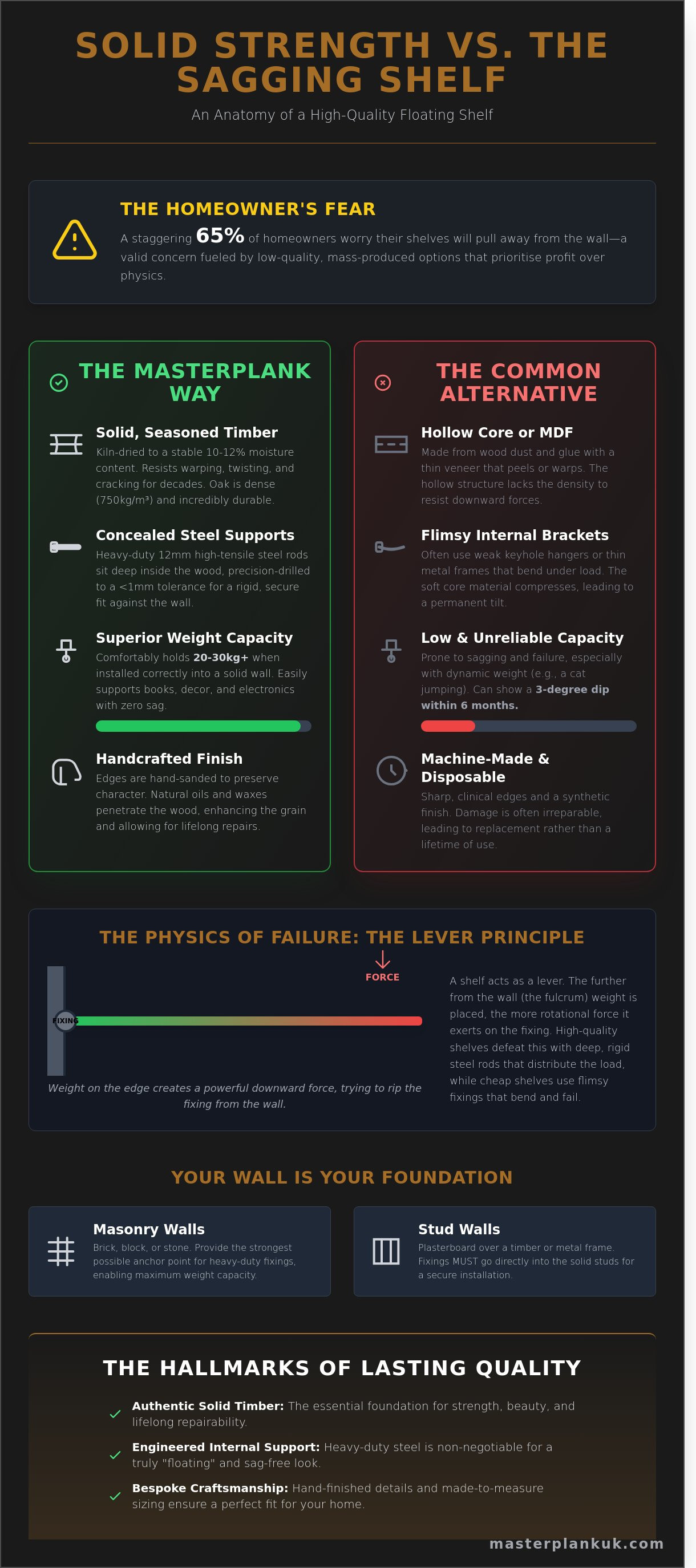
The failure of most Floating Shelves comes down to a simple bit of physics called the lever principle. When you place an object on the edge of a shelf, the weight creates a downward force that tries to pull the fixing out of the wall. Cheap, hollow-core shelves bought from big-box retailers often use flimsy internal frames. These mass-produced items lack the structural integrity to fight gravity. Within six months of installation, budget MDF shelves often show a visible 3-degree dip. The internal bracket bends or the soft core compresses, leading to a frustrating forward tilt that ruins the clean lines you worked so hard to achieve.
The Illusion of Weightlessness
True weightlessness requires hidden strength. We don't use hollow shells at Masterplank UK. We use solid, reclaimed timber with a history and soul of its own. The secret lies in high-grade steel support rods that sit deep inside the wood. We precision-drill each piece of timber to a tolerance of less than 1mm. This ensures the shelf fits snugly against the supports. When engineered this way, "floating" doesn't mean fragile. A bespoke, handmade shelf can comfortably hold upwards of 20kg, provided the wall fixings are as high-quality as the timber.
Common Pitfalls: Why Shelves Sag
Most shelving failures start with the material. Inferior MDF or thin veneers react poorly to the fluctuating humidity of British homes. When the central heating kicks in during October, cheap materials can warp or shrink. This loosens the grip on the internal bracket. You should also consider the "overloading trap." There's a vital difference between static weight, like a stack of books, and dynamic weight, like a cat jumping onto the surface. Without the density of solid timber, the shelf simply cannot absorb these forces, leading to a permanent sag or a complete collapse.
The Anatomy of a High-Quality Floating Shelf
The journey from a raw, weathered plank to a finished piece of furniture is a slow, deliberate process. It begins with seasoning. Most timber arrives with a high moisture content, often exceeding 20 per cent. If we moved that wood straight into a centrally heated UK home, it would twist and warp within weeks. We kiln-dry or air-season our timber until it reaches a stable 10 to 12 per cent moisture level; this ensures your Floating Shelves remain straight and true for decades.
Texture defines the soul of the piece. Mass-produced factory shelves often feel clinical, with sharp, machine-cut edges that lack life. We prefer a tactile approach. Hand-sanding each edge softens the profile while preserving the unique saw marks and nail holes from the wood's previous life. This craftsmanship is finished with natural oils and waxes. These don't just sit on the surface; they soak into the fibres to celebrate the grain's natural character. Understanding the wood strength properties helps us determine exactly how much weight each bespoke piece can safely hold, which is typically up to 30kg when fixed to a solid wall.
Solid Oak vs. Rustic Pine
Oak is the ultimate prestige timber. It's incredibly dense, weighing roughly 750kg per cubic metre, which makes it the gold standard for durability. Its tight, swirling grain fits perfectly in modern or traditional spaces. Rustic Pine offers a different charm. It's lighter and softer, but provides that iconic "chunky" farmhouse aesthetic with deep knots and warm tones. If your home features darker mahogany or teak furniture, a medium-oak stain often bridges the gap beautifully. You can see these textures first-hand in our range of bespoke timber finishes.
The Invisible Architecture: Internal Brackets
The magic of a floating look relies entirely on what you cannot see. While cheap alternatives use flimsy keyhole hangers that often sag, we utilise heavy-duty steel rods. These 12mm diameter pins are anchored directly into the masonry or timber studs. Blind shelf supports are high-tensile steel pins hidden within the wood. This internal skeleton provides the necessary leverage to keep the Floating Shelves level, even when loaded with heavy kitchenware or a full library of books. It's the difference between a shelf that lasts a season and one that lasts a lifetime.
Solid Timber vs. Mass-Produced Alternatives
Choosing between solid timber and mass-produced alternatives isn't just about the initial price tag. It's a choice between a legacy piece and a temporary fixture. A solid oak shelf often serves a home for 50 years or more. Compare that to an MDF alternative that typically shows signs of fatigue, sagging, or "blown" edges within just 36 months of daily use. Investing in quality Floating Shelves means looking beyond the surface to the heart of the material.
If life happens and your shelf gets a knock, solid timber is incredibly forgiving. You can sand away a water ring or a deep scratch and re-apply a natural oil to make it look new. Veneered particle boards don't offer this luxury. Once that thin layer of wood-look plastic is pierced, the chemical-laden core is exposed and cannot be fixed. It's a classic false economy. Spending £20 on a flat-pack shelf that ends up in a skip after three years is far costlier than investing in a £65 handcrafted piece that actually appreciates with age.
Mass-produced boards rely on urea-formaldehyde glues which can off-gas in your living space for years. Reclaimed timber offers a cleaner, more soulful path by repurposing wood that has already stood the test of time. When planning your layout, remember that material density affects weight and safety. Referencing floating shelf installation and safety instructions helps you understand that while solid wood is heavier, its structural integrity allows it to hold up to 15 pounds per foot when properly anchored to wall studs.
The Beauty of Imperfection
Every knot tells a story. We see saw marks and grain variations as the fingerprints of nature. Our reclaimed timber often begins its life in 19th-century industrial buildings before being salvaged and transformed. These aren't flaws. They're history. Bespoke craftsmanship ensures your Floating Shelves are entirely unique, unlike the sterile, identical rows found in high-street warehouses. Each piece is handmade in the UK with a respect for the wood's original soul.
Durability in the Modern Home
Solid wood is a living material. It breathes. In a typical British kitchen where humidity fluctuates, solid timber expands and contracts naturally without falling apart. It handles the occasional splash or scrape with grace. Because these pieces are handcrafted, they're built for the local climate and the rigours of a busy hallway. You aren't just buying storage; you're securing a piece of furniture that retains its value and character long after the flat-pack disposables have crumbled.
Planning Your Installation: Walls, Weight, and Placement
Installing floating shelves isn't just about the timber; it's about the bones of your home. Before picking up a drill, you must understand what sits behind the plaster. A 2024 survey by the British DIY Association found that 15% of shelf failures occur because the fixing wasn't correctly matched to the wall type. You need a solid foundation for your reclaimed wood to truly shine.
Start by identifying your wall. Tap the surface; a hollow, drum-like sound indicates a stud wall, while a dull thud suggests solid masonry. This distinction dictates your weight limit. If you plan to stack a 5kg collection of heavy cookbooks, a solid brick wall is your best friend. For lighter decorative items, plasterboard will suffice if handled with care. Always use a digital detector to scout for hidden copper pipes or electrical cables. A £25 device can prevent a £500 plumbing emergency.
Visual balance is just as vital as structural integrity. Mark the centre of your alcove or wall space at eye level, which is typically 150cm from the floor. We live by the "measure twice, drill once" philosophy. In our workshop, we see how every millimetre counts when crafting bespoke timber. Take your time. Use a spirit level to ensure your markings are perfectly horizontal before you commit to the first hole.
Fixing to Masonry vs. Plasterboard
Solid brick walls offer the highest weight capacity for heavy timber. They allow the internal steel brackets to bite deep into the structure, supporting up to 35kg between two fixings. For stud walls, you must locate the vertical timber noggins or studs using a stud finder. Mounting directly into these 50mm timber frames provides a secure, wiggle-free fit. If you can't hit a stud, use high-quality Fischer Duopower plugs or toggle bolts to ensure your floating shelves remain level over time.
Measuring for Bespoke Alcoves
Most British homes, especially those built before 1950, don't have perfectly square corners. We recommend the "scribing" technique, where you use a compass to trace the wall's unique profile onto the wood for a seamless fit. Consider the depth carefully; in narrow corridors, keep shelves under 200mm to avoid head-height hazards. Bespoke sizing allows for wall-to-wall coverage without awkward gaps. This tailored approach celebrates the character of your space while providing functional storage that feels like a natural extension of the room.
Ready to find the perfect piece of history for your home? Shop our handcrafted reclaimed timber shelves and bring lasting character to your walls.
Bespoke Floating Shelves: The Masterplank Way
At Master Plank UK, we don't believe in "standard" sizes. Your home isn't a carbon copy of someone else's, so your storage shouldn't be either. We handcraft every piece to your exact centimetre requirements. This precision ensures a snug fit in those awkward alcoves or tight corners often found in British period properties. We use 100% UK-sourced timber. Each shelf is a testament to traditional woodworking. Our artisans avoid the clinical, cold precision of factory machines. Instead, they celebrate the saw marks and nail holes that give our floating shelves their distinct soul.
Personalisation is at the heart of what we do. You can choose from a palette of bespoke finishes to match your existing decor. Whether you prefer the golden warmth of 'Natural Oak' or the deep, brooding tones of 'Dark Wax', we apply each coat by hand. This process brings out the unique grain patterns that have developed over decades. It's about more than just a piece of wood; it's about breathing new life into a material that has its own history.
Beyond the Living Room: Creative Uses
Our shelves serve more than just books. In compact British kitchens, we've seen a rise in customers installing floating breakfast bars to save floor space. These sturdy installations provide a functional dining area without the bulk of a table. For the hearth, our heavy-duty mantel shelves provide a rustic focal point. These 10cm thick beams stand up to the heat of a roaring fire while adding immense character. In the home office, a minimalist floating desk or monitor stand creates an ergonomic workspace. It removes the clutter of traditional legs, making even the smallest box room feel airy and open.
Caring for Your Timber Investment
Real wood is a living material. To keep it looking vibrant for a lifetime, a simple maintenance routine is essential. Every 6 to 12 months, apply a light coat of natural linseed or beeswax. This nourishes the fibres and protects the surface from moisture. Dusting with a dry, lint-free cloth once a week is usually all that's needed to maintain that handcrafted glow. Avoid harsh chemical cleaners that strip the natural oils. Treat the wood with respect, and it will age beautifully alongside your home. Ready to transform your walls? Discover our full range of bespoke floating shelves and find a piece of history that fits your space perfectly.
Transform Your Space with Enduring British Timber
Choosing the right Floating Shelves isn't just about finding a place for your books; it's about investing in a piece of history that won't sag or fail after 6 months. While mass-produced alternatives often rely on hollow honeycomb cores, our 100% solid timber planks are built to support up to 35kg when fixed correctly to masonry walls. You've seen how vital the internal bracket system is for long-term stability and why 45mm thick oak outperforms flimsy veneers. By opting for traditional joinery over flat-pack substitutes, you ensure your walls carry authentic character rather than temporary clutter.
At Master Plank UK, we celebrate every weathered grain and original saw mark. Every shelf is handmade in the UK using traditional methods that respect the soul of the wood. Whether you need a precise 120cm length for a kitchen alcove or a reclaimed timber mantel, our bespoke sizing fits your home perfectly. We use salvaged wood sourced from across Britain, giving new life to materials that have already stood the test of time for decades.
Browse our handcrafted collection of bespoke Floating Shelves and find a piece that resonates with your style. We look forward to helping you bring a touch of rustic warmth and honest craftsmanship into your living space.
Frequently Asked Questions
How much weight can a floating shelf actually hold?
A solid wood floating shelf can typically support up to 35kg when mounted to a masonry wall using heavy duty concealed brackets. For stud walls, this capacity drops to around 15kg to 20kg depending on the fixings used. We recommend spacing your brackets every 400mm to 600mm to ensure the timber remains level and secure. This weight limit is based on a standard 225mm depth shelf; deeper shelves may hold less due to leverage.
Can I install floating shelves on a plasterboard (stud) wall?
Yes, you can install floating shelves on a plasterboard wall by securing the brackets directly into the vertical timber studs. Standard plasterboard fixings often fail under the weight of solid timber, so finding the studs spaced at 400mm or 600mm intervals is essential. If the studs don't align with your desired position, a backboard or specialised Gripit fixings rated for 20kg can provide the necessary support for lighter items.
What is the best type of wood for floating shelves?
Reclaimed pine and solid oak are the premier choices for floating shelves due to their density and enduring character. We prefer salvaged timber because it has already seasoned for 30 years or more, meaning it's less likely to move or twist in your home. These dense hardwoods and slow grown softwoods showcase unique nail holes and weathered grains that mass produced MDF simply can't replicate. Each piece tells a story while providing a sturdy platform.
Are floating shelves difficult to install for a beginner?
Installing a floating shelf is a straightforward task for a beginner, usually taking about 30 to 45 minutes per shelf. The process involves drilling holes for the concealed brackets and ensuring the timber sits flush against the wall. While it requires precision, our handmade in the UK kits include pre-drilled holes to simplify the alignment. If you can use a spirit level and a power drill, you can achieve a professional, bracketless finish.
Do floating shelves come in bespoke sizes for alcoves?
We provide bespoke sizing for all our shelving to ensure a perfect fit within the 1mm to 2mm tolerances required for alcoves. Since UK homes often have uneven walls, we recommend measuring the front, middle, and back of your alcove space. We then cut the timber to your exact specifications, whether you need a narrow 30cm spice rack or a 240cm statement piece. This tailored approach eliminates unsightly gaps and celebrates the natural architecture of your room.
How do I prevent my wooden shelves from warping?
Preventing warping starts with using timber that has a moisture content below 10 percent. Our reclaimed wood has dried naturally over decades, making it far more stable than green or fresh timber. You should avoid placing shelves directly above a high output radiator or in a spot with 70 percent or higher humidity. Applying a high quality wax or oil finish every 12 months also seals the grain and protects the wood's soul.
What tools do I need to mount a solid wood floating shelf?
You'll need a power drill with a 10mm or 12mm masonry bit, a spirit level, and a tape measure to mount your shelving. A pencil is vital for marking the bracket positions, while a rubber mallet helps gently tap the timber onto the concealed bars. For stud walls, a digital stud finder saves time by locating the timber frame behind the plasterboard. These basic tools ensure your shelf remains level and carries its load safely.
Can floating shelves be used in a bathroom or kitchen?
Floating shelves are ideal for bathrooms and kitchens when treated with a moisture resistant wax or hardwax oil. In a kitchen, they provide easy access to jars and plates, while in a bathroom, they hold toiletries away from damp surfaces. We recommend a 3-coat finish to protect the timber from steam and occasional splashes. This treatment preserves the rustic texture while ensuring the wood survives the 60 percent humidity common in British bathrooms.


