


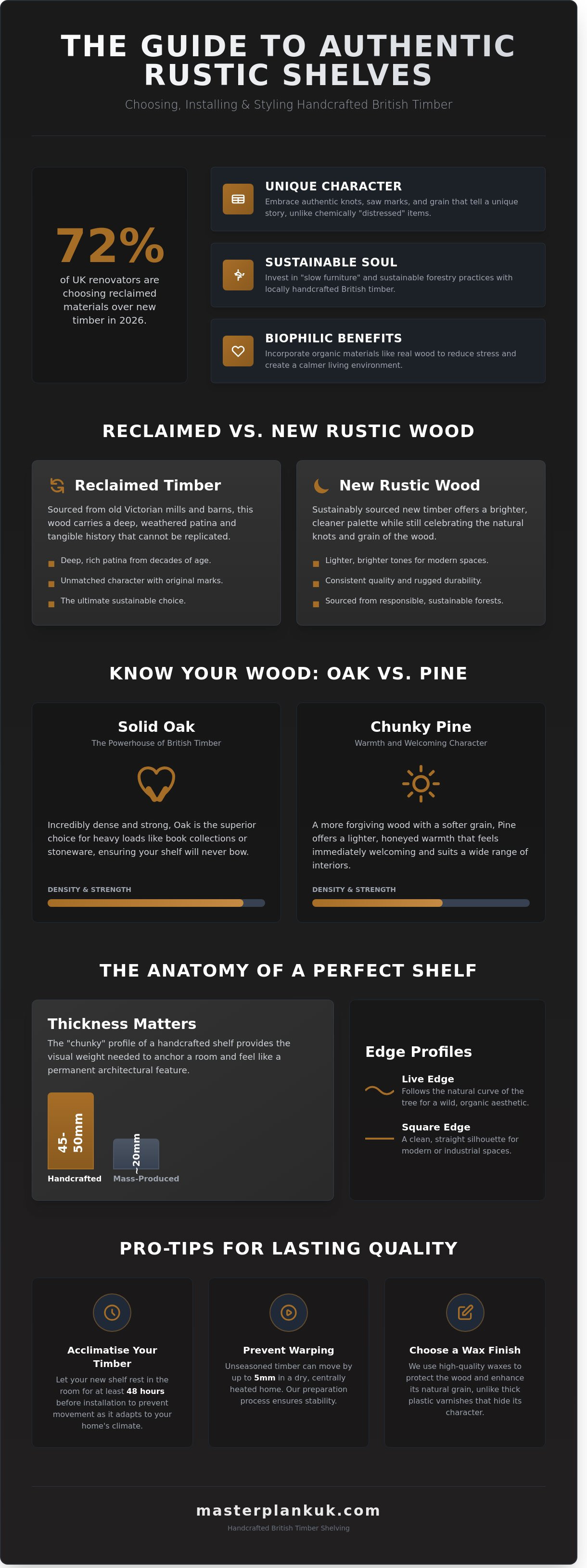
A shelf shouldn't just be a functional slab of wood; it should be a piece of heritage that outlasts the house itself. In 2026, industry reports indicate that 72% of UK renovators are choosing reclaimed materials over new timber to ensure their homes have a unique, sustainable soul. You likely want that same sense of history, yet you're probably worried about your rustic shelves sagging or the wood warping in your centrally heated living room. It's a valid concern, especially since unseasoned timber can move by up to 5mm if it hasn't been prepared correctly for the dry air of a modern home.
We believe every knot and nail hole tells a story worth keeping. This guide will help you discover how to select, install, and style handcrafted rustic shelves to bring authentic character to your walls. We'll explain the vital differences between reclaimed and new timber, give you the confidence to install a sturdy focal point, and share our expert styling tips to make your space feel truly bespoke.
Key Takeaways
- Learn to embrace the authentic character of British timber by understanding how natural knots and saw marks add a unique soul to your living space.
- Discover how to select the ideal wood species and finish for your specific environment, ensuring your furniture thrives in every room from the kitchen to the lounge.
- Master the art of professional installation with a clear guide on wall types and essential tools for securing your rustic shelves with confidence.
- Unlock the principles of visual balance to style your bespoke shelving using a harmonious mix of textures, greenery, and the timeless "rule of three."
- Explore the lasting value of "slow furniture" and why choosing locally handcrafted pieces is a more sustainable, high-quality investment for your home.
Understanding the Character of Authentic Rustic Shelves
Authenticity in British woodworking isn't about achieving a sterile, factory-perfect finish. It's about the stories told through the grain. When we talk about rustic shelves, we're describing timber that hasn't had its history sanded away. In the UK, high-quality rustic furniture celebrates the life of the tree, preserving the unique narrative of the wood from the forest to your fireside. Unlike mass-produced items that use chemical "distressing" to mimic age, genuine rustic pieces possess a tangible soul. You can feel the difference in the weight and the texture of a hand-finished plank.
Natural imperfections define this style. Knots, shakes, and original saw marks act as signatures of the natural world. These aren't defects; they're the evidence of a slow, organic growth process that takes decades. Bringing these textures into a modern home does more than just fill a gap on a wall. Research into biophilic design suggests that incorporating organic materials like wood can reduce stress levels, creating a calmer, more grounded living environment. If you're curious about the mechanics of how these heavy pieces stay up, you might ask What is a Floating Shelf? to understand the structural support needed for such substantial timber.
The Anatomy of Rustic Timber
Choosing the right edge profile changes the entire mood of your room. Live edges follow the natural curve of the tree, offering a wild, untamed aesthetic that suits cottage interiors. Square edges provide a cleaner silhouette, perfect for industrial or contemporary spaces that still crave warmth. Grain patterns also play a vital role, with tight rings indicating slow-grown, dense wood that offers superior strength. Rustic timber is a material that retains its natural history through visible marks and growth patterns.
Reclaimed vs. New Rustic Wood
Structural integrity is our priority at Master Plank UK. Salvaged timber often comes from old Victorian mills or barns, carrying a deep, weathered patina that new wood can't replicate. New, sustainably sourced wood offers a brighter palette while maintaining the same rugged durability. We handcrafted every piece to ensure it stands the test of time, avoiding the warping often found in cheap, kiln-dried alternatives. Whether your home is a 17th-century farmhouse or a 2026 new-build, selecting the right timber grade ensures your shelving feels like a permanent part of the architecture rather than a fleeting trend.
Selecting the Right Timber and Finish for Your Space
Every room in your home has its own personality and climate. Choosing the right timber for your rustic shelves requires a balance of aesthetics and practicality. In a kitchen, humidity levels often fluctuate by 20% during cooking; this environment demands a stable wood that can handle moisture without warping. Conversely, a dry living room with central heating presents a different challenge, as timber can contract if it loses moisture too quickly. We recommend letting your timber acclimatise to your room for 48 hours before installation to ensure a perfect fit.
Authenticity lives in the dimensions. To achieve a true farmhouse or industrial look, thickness is your best friend. While mass-produced boards often measure a flimsy 20mm, genuine rustic shelves are typically 45mm to 50mm thick. This "chunky" profile provides the visual weight needed to anchor a room. It also allows us to customise the timber to fit awkward alcoves or specific wall spaces. A bespoke shelf cut to the exact millimetre looks intentional, transforming a forgotten corner into a structural feature of the home.
Solid Oak vs. Chunky Pine
The choice between oak and pine often comes down to the story you want to tell. Oak is the powerhouse of British timber. Its incredible density makes it the superior choice for heavy loads; it won't bow under the weight of a 30kg book collection or heavy stoneware. We explore this material's legendary longevity in our guide to Solid Oak Dining Tables. Pine, meanwhile, offers a lighter, honeyed warmth that feels immediately welcoming. It is a more forgiving wood that carries a softer grain. Regardless of your choice, we believe in using timber sourced through sustainable forestry practices to ensure that your furniture respects the natural world it came from.
The Art of the Wax Finish
We don't believe in hiding wood under thick layers of plastic varnish. Instead, we use high-quality waxes to breathe life into the grain. The finish you choose defines the mood of the piece. Medium Oak offers a classic, golden-brown hue that fits most traditional homes. English Oak provides a slightly richer tone, while Dark Oak creates a bold, heritage look that works beautifully against white or forest green walls.
Applying wax by hand is a slow, tactile process. It allows us to highlight the unique character of the wood, from weathered saw marks to original nail holes. These aren't flaws; they're the soul of the timber. A hand-buffed wax finish protects the surface from daily dust and occasional spills while maintaining that wonderful, organic texture that you just have to touch. If you're ready to bring this craftsmanship into your home, you can browse our handcrafted collection to find your perfect match.
A Comprehensive Guide to Installing Your Rustic Shelves
Installing your rustic shelves is the moment where raw, characterful timber finally finds its place in your home. It's a task that requires a blend of patience and precision to ensure those weathered grains are displayed safely. Before you pick up the drill, gather your essentials. You'll need a high quality spirit level, a masonry or wood drill bit, a pencil, a tape measure, and a digital pipe detector. Using the right tools ensures the finish looks professional and the timber remains the star of the show.
The foundation of a secure installation lies in understanding your walls. Solid masonry, such as brick or stone, is the ideal partner for heavy timber because it allows for deep, expansive anchoring. If you're working with plasterboard, the process changes. You must locate the vertical timber studs behind the board to provide a solid bite for your screws. According to 2024 building safety observations, roughly 15 percent of shelving failures occur because the fixings were only secured into thin drywall rather than the structural frame.
Weight calculation is your next priority. Reclaimed timber is dense and heavy. A single 120cm oak plank can weigh 10kg on its own. When you add a collection of books or ceramic vases, that load can easily double. Always factor in the combined weight of the wood and your display items before choosing your fixings. Safety is paramount; use a detector to check for hidden cables and water pipes. It's a simple two minute check that prevents costly repairs and keeps your installation stress-free.
Floating Shelves vs. Bracketed Support
Choosing between a floating look and exposed brackets depends on your aesthetic and the intended load. Floating shelves offer a clean, minimalist silhouette that lets the natural edges of the wood breathe. This style is perfect for a modern rustic vibe where you want the timber to appear as if it's growing directly from the wall. For details on the internal rods used for this look, see our guide on Floating Shelves.
If you're planning to store heavy kitchenware or a large library, industrial steel brackets are the superior choice. They provide a rugged, heritage feel that complements the salvaged nature of the wood while offering immense structural integrity. The contrast between cold steel and warm, lived-in timber creates a beautiful balance in any room.
Securing Heavy Timber Safely
When working with solid oak or thick pine, the hardware must match the quality of the wood. Choosing the right shelf brackets ensures that the natural movement of the timber won't compromise the fixings over time. To achieve a perfect finish, check your level across the entire length and also from front to back. Even a slight tilt can cause items to migrate toward the edge over several months.
Solid wood shelves over 20kg must be anchored into wall studs or solid masonry to prevent failure. This is a non-negotiable rule for anyone installing substantial pieces of handmade furniture. By taking these precautions, you're not just hanging a shelf; you're securing a piece of history that's handmade in the UK to last for generations.
Styling and Maintaining Your Bespoke Shelving
Your rustic shelves aren't just storage. They're a living part of your home's story. Styling them requires a delicate touch and a respect for the wood's history. Most interior designers follow the rule of three; a simple technique where items are grouped in odd numbers to create visual interest. It prevents the display from looking static or overly symmetrical. You might pair a tall ceramic vase with a medium-sized stack of books and a small trailing plant. This variation in height draws the eye across the timber's natural grain and unique character marks.
Texture plays a vital role in a balanced home. The weathered, tactile surface of reclaimed wood creates a perfect backdrop for contrasting materials. Smooth glass reflects light, while matte ceramics ground the space. Adding greenery brings a burst of life that highlights the organic warmth of the wood. As seasons change, your shelves should too. In 2026, we see a shift toward 100% natural seasonal decor. Think dried hops in autumn or fresh eucalyptus in spring. These subtle updates keep your space feeling intentional and connected to the world outside.
Creating a Focal Point
Depth is achieved through layering. Place larger frames or platters at the back, slightly overlapping them with smaller treasures in front. For those using handcrafted kitchen shelves, this is where utility meets beauty. Display your copper pots or artisanal stoneware with pride rather than hiding them in cupboards. Lighting is the final touch. Installing LED strips with a high Color Rendering Index (CRI) of 90 or above will make the saw marks and nail holes pop, celebrating the history of the timber.
Caring for Solid Wood in Centrally Heated Homes
Solid timber is a reactive material. It breathes. When the heating goes on in winter, humidity levels in UK homes can drop below 30%. This causes the wood to contract. To prevent warping or significant movement, avoid placing your rustic shelves directly above a radiator. A gap of at least 25cm is recommended to allow for steady airflow. Cleaning is straightforward. Forget the harsh chemicals found in supermarket sprays. A soft lint-free cloth and a light application of natural beeswax every six months will nourish the grain. This simple routine ensures your piece of history stays beautiful for decades.
Why Handcrafted British Timber Trumps Mass Production
Mass production favors speed over spirit. When you choose rustic shelves crafted from British timber, you're rejecting the throwaway culture that dominates modern retail. In the UK, roughly 1.6 million tonnes of furniture are discarded every year. Most of this is low-grade flat-pack that cannot survive a single house move. Locally made furniture represents "slow furniture." It's a deliberate choice to invest in pieces that grow more beautiful with age. Our timber doesn't travel across oceans in shipping containers; it's sourced closer to home. This significantly reduces the carbon footprint compared to mass-produced alternatives that often travel over 5,000 miles before reaching a warehouse.
The difference in durability is found in the joinery. While flat-pack items rely on cam locks and particle board that crumbles under pressure, handmade shelves use solid timber. These pieces are built to hold weight without sagging. They're designed to be the fixtures of your home for decades, not just a few seasons. Every knot and grain pattern is a testament to the wood's strength and history.
Supporting UK Artisans
Traditional woodworking is a tactile art. At Masterplank UK, we believe every plank has a soul. We don't see nail holes, weathered cracks, or saw marks as defects; they're chapters of a story. Our artisans use techniques that respect the wood's natural history. The bespoke process starts with raw, salvaged timber. We hand-select pieces for their unique character. This ensures your finished centrepiece isn't just a product. It's a piece of British heritage crafted with pride in a digital age.
Bespoke vs. Off-the-Shelf
Period homes in Britain rarely have perfectly straight walls or 90-degree corners. Standard, off-the-shelf shelving often leaves awkward gaps or requires messy fillers. Choosing bespoke rustic shelves allows for a precision fit that respects the architecture of your room. You aren't limited to a handful of factory finishes. You have the luxury of choosing the exact edge profile, the depth of the grain, and the specific colour that complements your space. This level of detail transforms a simple storage solution into a structural feature that feels like it has always belonged there.
Bring Timeless Character into Your 2026 Home
Choosing the right timber accents is about more than just storage; it's about inviting history into your living space. You now know how to identify authentic grain patterns and select finishes that protect the wood's natural soul. By mastering secure installation and textured styling, your home can celebrate the beauty of salvaged materials over mass-produced alternatives.
At Master Plank UK, every piece is handmade in the UK by master craftsmen. We use 100% sustainably sourced solid timber, ensuring your furniture stands the test of time. Since every wall is unique, we offer bespoke sizes tailored to your measurements. Our workshop embraces the slow-furniture movement, where every knot and nail hole is a celebrated feature. You're investing in British heritage that breathes new life into old timber.
Ready to elevate your interior with furniture that has a soul? Browse our collection of handcrafted rustic shelves today. We're here to help you create a space that feels honest, warm, and entirely yours.
Frequently Asked Questions
Are rustic shelves suitable for plasterboard walls?
Yes, you can install rustic shelves on plasterboard walls provided you use heavy duty toggle bolts or locate the internal timber studs. A standard 15mm plasterboard sheet supports up to 20kg when you use the correct metal butterfly fixings. We recommend finding the vertical studs, usually spaced 400mm or 600mm apart, for the most secure fit. This ensures your solid wood timber stays firmly on the wall without any risk of sagging.
How much weight can a solid oak floating shelf hold?
A solid oak floating shelf typically holds between 20kg and 35kg when fixed into a solid brick or stone wall. This capacity decreases by 50 percent if you're mounting to a hollow partition wall without hitting a stud. Our handcrafted oak is dense and heavy; therefore, the internal steel floating brackets must be at least 12mm in diameter to prevent the wood from dipping under its own weight. It's a sturdy solution for your heavy books or kitchenware.
Do rustic shelves require a lot of maintenance?
Rustic shelves are incredibly low maintenance and only require a fresh coat of wax every 12 to 18 months. Because we celebrate the natural cracks and nail holes in our reclaimed timber, minor scuffs often blend into the existing character. Simply use a soft lint free cloth to apply a high quality beeswax. This process takes less than 10 minutes and keeps the grain looking rich, hydrated, and full of life.
What is the difference between rustic pine and rustic oak?
The primary difference lies in the density and grain structure, as oak is a hardwood while pine is a softwood. Oak features a tight, complex grain and weighs approximately 700kg per cubic metre. Pine is lighter, around 500kg per cubic metre, and often displays larger knots and more prominent golden hues. Both offer a beautiful finish, but oak provides a more rugged durability for heavy duty use in busy homes.
Can I install rustic shelves in a bathroom or high-moisture area?
You can install rustic shelves in a bathroom if the wood is treated with a moisture resistant oil or wax. Steam from a daily shower can increase humidity levels to 70 percent, which might cause raw timber to swell or move. We apply three coats of protective finish to our handmade pieces to ensure they withstand these damp conditions. Proper ventilation remains essential to keep the wood's story alive for decades to come.
How do I prevent my wooden shelves from warping over time?
To prevent warping, keep your shelves away from direct heat sources like radiators or wood burning stoves where temperatures exceed 25 degrees Celsius. We kiln dry our timber to a moisture content of 8 to 12 percent before crafting each piece. This stable foundation ensures that the wood won't twist or bow as it settles into your home's unique environment. Consistent humidity is the secret to a long lasting shelf.
What tools do I need to install bracketed rustic shelves?
You'll need a power drill, a 7mm masonry bit, a spirit level, and a cross head screwdriver for a standard installation. Using a spirit level at least 60cm long ensures your rustic shelves sit perfectly flat across their entire length. If you're drilling into masonry, ensure you have 50mm wall plugs and matching screws. These simple tools allow you to mount your piece of history securely in under 30 minutes.
Why should I choose handmade shelves over cheaper flat-pack options?
Choosing handmade shelves means you're investing in a 35mm thick solid timber piece instead of a hollow, 12mm MDF imitation. Flat pack options often end up in landfills within 24 months, whereas our reclaimed wood has already survived decades of previous use. Each piece is unique, featuring genuine saw marks and weathered textures that mass production simply can't replicate. It's a choice for sustainability and soul over temporary convenience.


