


That flat-pack bargain sitting in your lounge isn't a piece of furniture; it's a ticking clock waiting to wobble under the weight of a single tea cup. You've likely felt the frustration of watching mass-produced veneers peel away after just twelve months of use in a centrally heated home. It's a common story in 2026, where the soul of craftsmanship is often traded for cheap convenience. You deserve a wood table side that doesn't just fill a gap, but actually breathes life and history into your living space.
We believe your home should be filled with objects that grow more beautiful with age, not less. This guide is here to help you understand the nuances of timber, from the dense reliability of oak to the warm, rustic charm of reclaimed pine. You'll discover how to select a bespoke piece, handmade in the UK, that survives the rigours of modern life while celebrating every natural nail hole and saw mark. We'll also share our professional secrets for preventing warping and damage, ensuring your investment remains a family heirloom for a lifetime. We're going to explore everything from grain patterns to essential oiling schedules so you can choose with confidence.
Key Takeaways
- Learn to distinguish between high-quality solid timber and mass-produced veneers to ensure your furniture brings authentic character to your home for a lifetime.
- Discover how to choose the ideal wood table side by balancing ergonomic height with the distinct textures and durability of Oak or Pine.
- Master the "Rule of Three" styling technique to create a stunning focal point that beautifully contrasts natural grain with metal, glass, and fabric.
- Find out how to protect your investment from central heating by using traditional waxing and oiling methods to nourish the wood and prevent warping.
- Understand the lasting value of bespoke furniture that is handmade in the UK, where every natural knot and nail hole is celebrated as a unique story.
What is a Wood Side Table and Why Does Timber Quality Matter?
A wood side table is far more than a convenient surface for a morning tea or a stack of evening reads. It acts as a grounding element in a room, bridging the gap between larger furniture pieces and the lived-in warmth of a home. To understand the evolution of these essential items, one might explore What is a Table? in its historical context. While the basic form remains a flat surface supported by legs, the "soul" of a handcrafted piece lies in the timber itself. Whether it's tucked beside a wingback chair or serving as a nightstand, a handcrafted wood table side provides a tactile connection to the natural world that cold, synthetic materials simply cannot replicate.
Quality timber matters because it carries a story. Unlike mass-produced furniture, where the grain is often a printed pattern on a thin veneer, solid wood is honest. Every knot, nail hole, and weathered groove in a reclaimed plank tells of its former life. This history brings an emotional value to the home. You aren't just buying a utility; you're investing in a legacy that ages gracefully, developing a rich patina that only time and touch can create.
The Role of Side Tables in Modern British Homes
In the UK, where living spaces often require clever layouts, the side table is a versatile hero. These pieces offer a small-footprint design that provides maximum utility without crowding a room. Timber remains the preferred choice for British interiors because it introduces organic textures into modern, often clinical, spaces. A well-placed wood table side piece creates a welcoming atmosphere, making a house feel like a home through its sturdy presence and warm, earthy tones.
Solid Wood vs. Flat-Pack: The Hidden Costs of Cheap Furniture
The difference between bespoke timber and flat-pack alternatives is structural and environmental. Mass-produced items rely on cam-locks, screws, and particle board, which often fail after a few years of use. In contrast, handmade joinery is built to last generations. The environmental impact is also stark. According to data from the North London Waste Authority, approximately 22 million pieces of furniture are discarded annually in the UK. Choosing sustainable, solid timber helps break this cycle of "disposable" living.
- Structural Integrity: Hand-cut joints distribute weight and stress better than metal fixings in chipboard.
- Authenticity: Real grain has depth and texture that a printed laminate can never mimic.
- Repairability: Solid wood can be sanded, waxed, and restored; once a veneer is chipped, the piece is usually destined for the skip.
Investing in quality means your furniture grows with you. It survives house moves, spills, and the changing fashions of interior design. It's a quiet confidence in craftsmanship that turns a simple household object into a cherished heirloom.
How to Choose the Perfect Wood Side Table for Your Space
Selecting a new piece of furniture is a personal journey. It’s about finding that specific balance between the raw beauty of nature and the practical needs of your daily life. When you bring a wood table side into your living room, you aren't just adding a surface; you're introducing a piece of history and craftsmanship that will likely outlast the sofa it sits beside.
To get the selection right, start with the tape measure. Ergonomics matter. Your table should sit within 5 centimetres of your sofa’s arm height. If it's too tall, reaching for a cup of tea feels awkward; too low, and it disappears into the floor. Think about the flow of the room. Leave at least 10 centimetres of breathing room between the table and other furniture to ensure the space feels open rather than cluttered.
- Evaluate your storage: Do you need a drawer to hide away remote controls, or would an open lower shelf better suit your collection of art books?
- Select your leg style: Powder-coated industrial steel legs offer a modern, airy feel. Traditional chunky wood legs provide a grounded, farmhouse aesthetic.
- Choose your finish: Natural oils sink deep into the grain to highlight textures, while hard-wax finishes offer a more robust shield against the occasional spill.
Understanding Timber Species: Oak vs. Pine
The soul of the furniture lies in the species. Oak is the premium choice for those seeking a hardwearing, dense surface. Its intricate grain patterns are legendary, and its structural integrity is backed by science; technical resources like Wood as an Engineering Material highlight how density directly correlates to long-term durability in domestic settings. Oak's heavy weight makes it perfect for high-traffic family homes.
Pine offers a different kind of charm. It’s characterful and warm. It takes stains beautifully, allowing for a "chunky" rustic look that feels lived-in from day one. When deciding, look at your existing flooring. You don't need a perfect match, but you do need a complementary tone. If you've already invested in Handcrafted Bedside Tables in a specific timber, continuing that theme creates a cohesive narrative throughout your home.
Sizing and Proportions: The Golden Rules
Scale is everything. A massive, weathered plank table might look stunning in a barn conversion but could overwhelm a compact city flat. Aim for visual balance. If your seating is low and sleek, a heavy, oversized wood table side might look out of place. Instead, opt for something with slimmer proportions that still celebrates the wood's natural imperfections like nail holes or original saw marks. These details provide a tactile connection to the timber's previous life without dominating the room’s footprint. If you're unsure which size fits your nook, you can browse our bespoke range to see how different dimensions transform a space.
Styling Your Side Table: Creating a Functional Focal Point
A wood table side serves as more than just a landing spot for your evening brew. It is a canvas that showcases the history of the timber. To style it effectively, decorators often lean on the "Rule of Three." This design principle suggests that items arranged in odd numbers are more appealing and memorable. You might place a medium-sized ceramic lamp, a small stack of linen-bound books, and a single brass coaster together. This trio creates a visual triangle that guides the eye without cluttering the surface. Contrast is vital when working with organic materials. The deep, swirling grain of reclaimed timber looks spectacular when paired with different textures. Place a smooth glass vase or a cold metal tray on top to highlight the wood’s natural warmth. Adding a soft fabric element, such as a hand-woven runner or a felt storage pot, softens the transition between the hard surface and your decor. Lighting plays a crucial role in bringing the wood to life. A well-placed lamp with a warm-toned bulb creates shadows that dance across the saw marks and nail holes. This highlight reel of the wood’s past life turns a simple piece of furniture into a conversational focal point. To keep the surface organised, use small trays to group items. This ensures the beauty of the timber remains visible rather than buried under loose keys or remote controls.The Industrial Look: Wood Meets Steel
Modernising a rustic wood top is easily achieved with black steel legs. This combination provides a sturdy, grounded feel that suits both converted warehouses and traditional Victorian terraces. You can create a cohesive flow through your home by pairing your side table with an Industrial Desk in the same room. The repetition of raw metal and 40mm thick timber planks builds a narrative of durability and honest craftsmanship that defines the 2026 industrial aesthetic.Rustic Charm: Embracing Natural Imperfections
In a rustic setting, we celebrate what others might call flaws. Cracks, knots, and original saw marks are the soul of the piece. To lean into this organic feel, pair your side tables with other substantial items like a Chunky Pine Coffee Table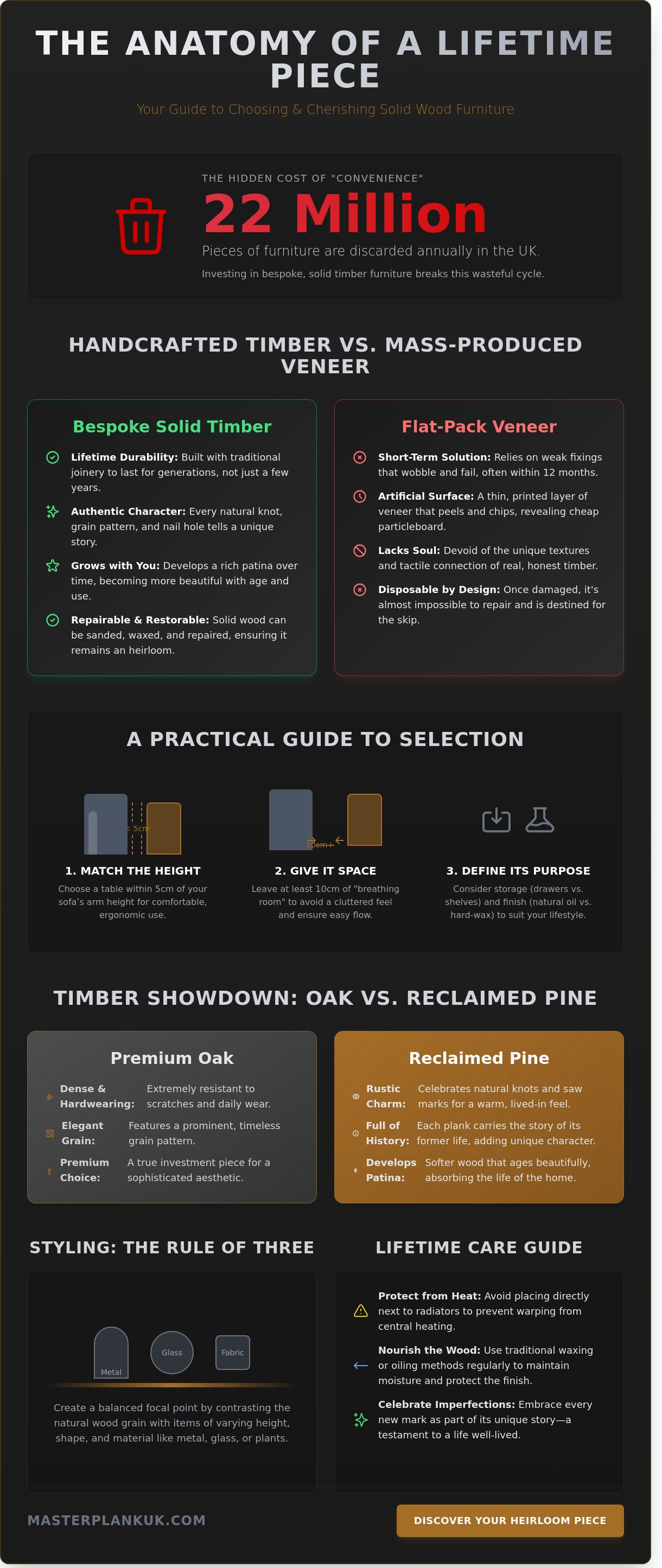
Caring for Solid Wood: How to Maintain the Character of Your Timber
Solid wood isn't a static material; it's a living, breathing history of the forest. When you bring a wood table side into your home, you're inviting in a piece of nature that continues to respond to its surroundings. Timber is a breathing material that reacts to its atmosphere. This organic movement is part of the charm, yet it requires a bit of mindful stewardship to ensure your furniture lasts for generations. Our reclaimed timber carries stories of its past life, and with the right care, those stories will continue in your living room.
Preventing Warping and Cracking
Central heating is the greatest challenge for timber in the UK. Since 1970, the average indoor temperature in British homes has risen by roughly 5 degrees Celsius, creating much drier environments than wood naturally prefers. Placing your table directly next to a radiator or a wood-burning stove can cause the wood to dry too quickly, leading to cracks or warping. We suggest keeping your furniture at least 1 metre away from direct heat sources. Maintaining a stable humidity between 45% and 55% helps the timber stay settled. Seasonal movement is normal; you might notice tiny gaps appearing in winter and closing in summer as the wood adjusts to the moisture in the air.
Refreshing the Finish: A Simple Maintenance Guide
A regular coat of high-quality beeswax or furniture oil acts as a nourishing skin for your timber. We recommend refreshing the finish every 6 months to maintain the protective barrier and highlight the unique grain. Apply the wax sparingly with a soft cloth, following the direction of the grain, then buff it to a rich lustre after 20 minutes. Unlike mass-produced laminate which is ruined by a single deep scratch, solid wood is remarkably forgiving. Minor marks can be gently sanded back and re-waxed, blending seamlessly into the existing character of the piece. It's this durability that makes a handmade wood table side a true heirloom.
- Do use coasters for every mug of tea to prevent heat rings and moisture marks.
- Do wipe up spills immediately with a dry, lint-free cloth to stop liquids from penetrating the grain.
- Don't use silicone-based sprays or harsh chemical cleaners that can strip the natural oils.
- Don't leave your table in direct, punishing sunlight for long periods, as this can fade the timber's natural colour.
If you're ready to invest in a piece that grows more beautiful with age, explore our range of handcrafted side tables today.
The Beauty of Bespoke: Why Handcrafted British Furniture Wins
Choosing a handcrafted wood table side piece isn't just about filling a gap in the living room. It's about bringing a slice of British heritage into your home. When you support local artisans, you're investing in a tradition that values quality over quantity. At Master Plank UK, our philosophy is simple: we celebrate the wood as it is. We don't hide the history of our timber under thick layers of plastic veneer. Instead, we let the natural character lead the design process, ensuring every piece feels grounded and authentic.
Sustainability sits at the heart of everything we do. By using reclaimed materials and slow-grown timber, we ensure that our carbon footprint remains small while our furniture remains incredibly durable. Every piece of wood we use has already stood the test of time, whether as part of an old building or a sturdy industrial structure. This resilience makes it the perfect material for a busy modern home where furniture needs to be both beautiful and practical.
The Maker’s Mark: Why No Two Pieces Are Alike
In a factory, machines churn out thousands of identical items every day. They're precise, but they're cold. A handcrafted piece is different. You'll find the subtle trace of a saw mark or the unique swirl of a grain that grew over several decades. These aren't defects; they're the fingerprints of the maker and the tree. Every knot tells a story of a branch that once reached for the sun. If you want to see how this philosophy translates into larger statement pieces, explore our guide to Handcrafted Rustic Dining Tables.
Investing in Future Antiques
We've grown used to a "throwaway" culture where furniture is treated as a temporary fix. Flat-pack items often lose their structural integrity after a single move. Solid timber is different. It's an investment in a future antique. As the years pass, your wood table side will develop a rich patina, absorbing the history of your family life. You'll know exactly who made it and where the timber originated, creating a sentimental value that mass-produced items can't touch. It's a badge of honour for any homeowner who values longevity.
- Authentic Origin: Every piece is handmade in our UK workshop by skilled joiners.
- Character First: We preserve nail holes, cracks, and weathered textures as marks of soul.
- Built to Last: Traditional joinery techniques ensure these pieces survive for generations.
It's time to move away from the assembly line and embrace the slow-made movement. A bespoke piece of furniture doesn't just sit in a room; it lives there with you. By choosing handcrafted, you aren't just buying furniture. You're becoming the custodian of a story that will continue long after it leaves our workshop.
Bringing Lasting Character to Your Living Space
Choosing the right furniture is about more than just filling a gap in a room. It's about finding a piece that carries a soul. You now understand why 100% sustainably sourced timber outperforms mass-produced alternatives, offering a lifespan that stretches across decades rather than just a few seasons. By following simple maintenance steps, you'll preserve the unique grain and weathered textures that make your wood table side furniture a true focal point in your home.
At Master Plank UK, we believe in the beauty of the slow-furniture movement. We don't rush the process. Every item is handmade in the UK, ensuring that the bespoke designs we create are tailored specifically to your living environment. Our commitment to traditional craftsmanship means your furniture retains its rustic charm while providing the durability needed for modern life. It's time to move away from the disposable and embrace the enduring quality of British timber.
Explore our collection of handcrafted wood side tables and bedside furniture and find a piece that resonates with your home's unique spirit. We look forward to helping you find the perfect match for your space.
Frequently Asked Questions
Is a wood side table better than glass or metal?
A wood side table offers a warmth and tactile soul that glass or metal simply cannot replicate. While glass can shatter and metal often feels clinical, timber ages with grace and gains character over the years. According to a 2023 report by the British Furniture Manufacturers, solid timber furniture lasts over 25 years on average. This makes it a far more sustainable and durable investment for your home compared to fragile or hollow alternatives.
How do I stop my wooden side table from getting water rings?
Preventing water rings starts with a high quality wax or oil finish that repels moisture effectively. We recommend using coasters for every drink to protect the timber's natural character from heat and damp. If a spill happens, wipe it away immediately with a dry cloth to prevent it from penetrating the grain. Applying a fresh coat of natural beeswax every 6 months keeps the surface sealed and ensures the wood's history isn't obscured.
Can I use a wooden side table in a bathroom or humid area?
You can use timber in humid spaces provided the wood is properly seasoned and sealed with a water resistant finish. Moisture levels in UK bathrooms often fluctuate between 40% and 70% humidity, which can affect natural materials. To prevent issues, choose a side table finished with a hardwax oil that creates a breathable yet protective barrier. Ensure the room is well ventilated to allow the wood to settle without absorbing excessive dampness.
What is the best wood for a hardwearing side table?
Oak is widely considered the gold standard for durability due to its dense grain and high Janka hardness rating. Reclaimed pine is another excellent choice for a hardwearing wood table side because the timber has already seasoned for decades. This age makes it more stable and less prone to the movement seen in younger, mass produced wood. These materials handle the knocks of daily life while gaining a beautiful, weathered patina.
How do I know if a side table is made of real solid wood?
Check the grain patterns to see if they continue naturally over the edges and through the joints. Real timber features unique knots and variations that don't repeat like a printed laminate or veneer would. If the piece feels unusually light or has a perfectly smooth, repetitive underside, it's likely a composite material. Our furniture is handmade in the UK using authentic planks, so you'll see genuine saw marks and history in every piece.
Does solid wood furniture always warp over time?
Solid wood is a living material that responds to its environment, but it won't warp if it's properly constructed. We use traditional joinery techniques that allow the timber to breathe and move slightly without losing its shape. Maintaining a consistent indoor temperature, ideally between 18 and 22 degrees Celsius, helps the wood stay stable. A 2022 industry guide notes that most structural movement occurs within the first 12 months as the wood acclimates.
How do I match a new wood side table with my existing furniture?
Focus on matching the undertones of the wood rather than trying to find an identical stain or finish. If your existing pieces have warm, honey hues, look for a wood table side with similar golden notes. Mixing different textures, like a rustic reclaimed surface next to a smooth oak floor, adds visual depth to a room. This approach celebrates the individuality of each piece, creating a curated home that feels gathered over time rather than manufactured.


