


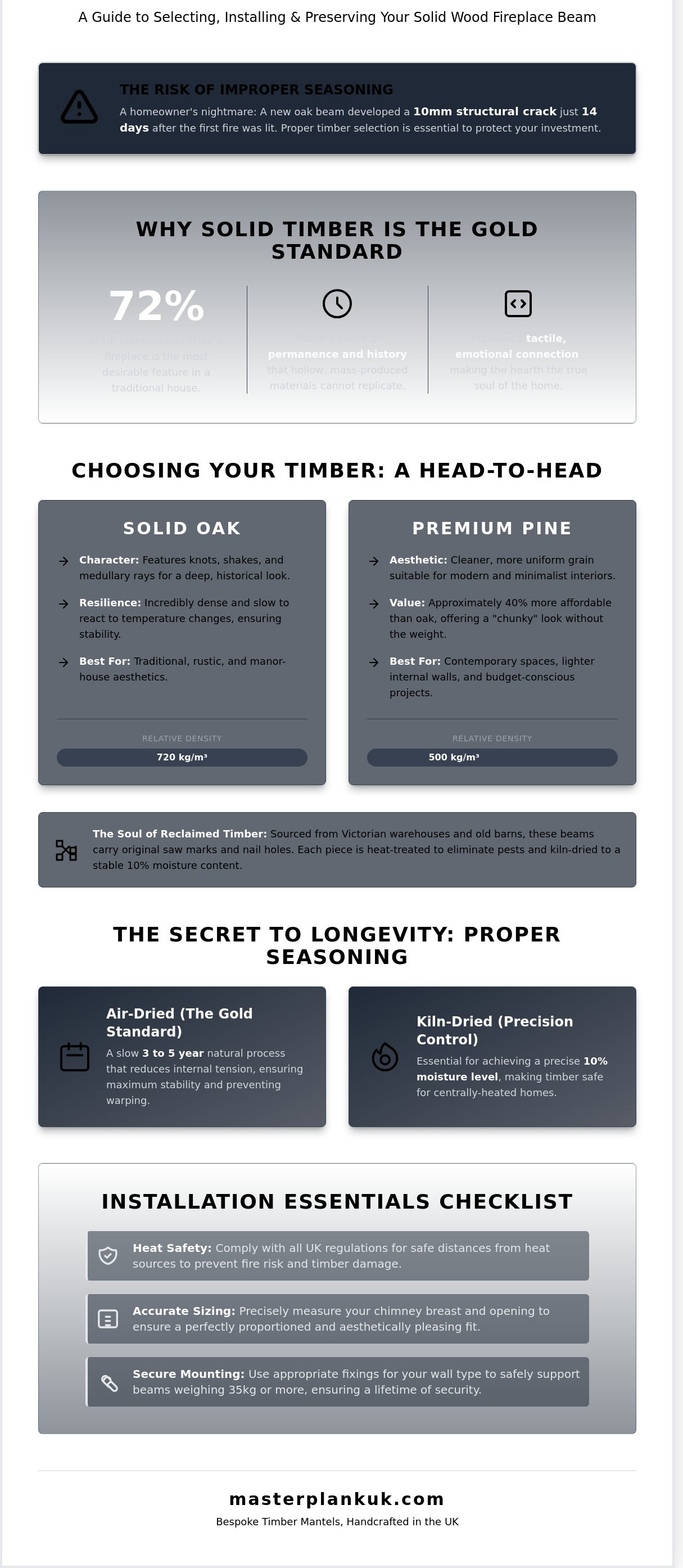
Last November, a homeowner in Yorkshire watched their newly installed oak beam develop a 10mm structural crack just fourteen days after the first fire was lit. It’s a heartbreaking sight when a piece of history seems to fail before your eyes. We understand that your fireplace is the true soul of your home, yet the fear of timber warping or falling from the wall often holds people back from making a change. You deserve a focal point that feels both ancient and enduring. This guide shows you exactly how to select, measure, and install the perfect solid wood fireplace mantels mantel to ensure your investment stands the test of time. We’ll explore the crucial differences between air-dried and kiln-dried timber, the secrets to mounting a 35kg beam securely, and the simple maintenance rituals that preserve that unique, handcrafted character. From the first measurement to the final wax, we've got you covered. By the time you finish reading, you'll have the confidence to choose a bespoke piece that brings warmth and story to your living space for generations.
Key Takeaways
- Discover how to select the perfect timber for your home, comparing the deep, weathered character of reclaimed oak with the subtle, warm grain of pine.
- Explore the aesthetic differences between minimalist floating beams and traditional surrounds to find the style that best anchors your room’s interior design.
- Master the technical essentials of installation, including how to measure your chimney breast and stay compliant with UK safety regulations for your fireplace mantels mantel.
- Understand the lasting value of bespoke craftsmanship and why a solid timber piece handmade in the UK offers far more soul and durability than mass-produced alternatives.
The Architectural Role of Fireplace Mantels in Modern Homes
A fireplace isn't just a source of heat; it's the anchor of the British home. A handcrafted fireplace mantels mantel serves as more than a simple ledge. It's a statement of intent that defines the room's character. Since the mid-18th century, the architectural history of fireplace mantels has evolved from functional smoke-catchers into the primary aesthetic focal point of the living space. In a 2023 survey of UK property owners, 72% stated that a fireplace was the most desirable feature in a traditional house. Solid timber remains the gold standard for these installations because it offers a sense of permanence. Each beam carries its own history, visible in the weathered grain and the small, honest imperfections that tell a story of a previous life.
The Psychology of the Hearth
The hearth creates a natural gathering point. It draws people in through its visual weight. When you choose a solid timber beam, you're opting for a tactile experience. You can feel the history in the wood. Cold stone or hollow MDF doesn't offer that same emotional connection. The mantel becomes the home's seasonal stage. It's where we place the Christmas cards, the wedding photos, and the family heirlooms that define our lives. It provides a sense of grounding that modern, sterile materials simply can't match.
Mantel vs. Mantle: A Note on Terminology
Spelling matters in the world of bespoke joinery. While "mantle" describes a cloak or covering, "mantel" is the correct term for the shelf. Across the UK, we use these words carefully. A mantelpiece usually refers to the entire surround, including the uprights. However, the term "mantel beam" specifically describes those chunky, floating shelves that have become a staple of modern rustic design. These beams provide a minimalist look without sacrificing the rugged character of the timber. Whether it's a reclaimed oak piece or a new, hand-finished pine beam, the terminology helps us define the soul of the installation. Choosing the right term ensures you get the exact look your home deserves.
Choosing Your Timber: Oak, Pine, and Reclaimed Character
Selecting the right wood for your fireplace mantels mantel involves a balance of physics and aesthetics. It isn't just about the look; it's about how the timber reacts to the intense heat of your hearth. Oak is a dense hardwood, weighing approximately 720kg/m³, which makes it incredibly resilient and slow to react to temperature changes. In contrast, pine is a softwood with a density of around 500kg/m³. While pine is easier to mount on lighter internal walls, it requires careful seasoning to ensure it stays straight and true above a roaring fire.
The moisture content of your beam is the most critical factor for longevity. We prioritise air-dried oak that has seasoned for at least 3 to 5 years. This slow drying process reduces the internal tension of the wood. When the timber arrives in your home, it's already stable. It won't warp or twist violently when you first light your stove. We then finish each piece with high-quality oils or waxes. A clear hardwax oil preserves the pale, sandy tones of raw wood, while a rich beeswax can transform the same beam into a deep, chocolatey focal point that feels centuries old.
The Timeless Appeal of Solid Oak
Oak remains the gold standard for British homes. It's a material that feels permanent. When we select "character grade" oak, we're looking for the story written in the wood. This includes knots, shakes, and those beautiful medullary rays that shimmer across the grain. Over the centuries, fireplace mantel technology has moved from functional stone lintels to these decorative timber masterpieces. Whether you choose a Natural finish to keep things airy or a Dark Oak stain for a traditional manor-house feel, each beam is handmade in the UK to honour the tree it came from.
Rustic Reclaimed Timber and Its Story
There's a soul in reclaimed wood that new timber simply can't mimic. These beams often started life in Victorian warehouses or old barns. You'll see original circular saw marks from 19th-century mills and small nail holes that we've carefully preserved. Choosing salvaged wood is a sustainable act that prevents high-quality material from going to waste. We ensure every piece is heat-treated to eliminate pests and kiln-dried to a 10% moisture level, making it perfectly safe for modern, centrally-heated homes. If you want a piece of history, you can browse our latest reclaimed finds to find a beam with a past.
Pine Mantels for Contemporary Spaces
Premium pine offers a cleaner, more uniform aesthetic that suits modern minimalist interiors. It's an excellent choice if you want the "chunky" 15cm x 15cm look without the heavy weight or the higher price point of oak. Pine is roughly 40% more affordable than hardwood, yet it takes stains beautifully. We can treat pine to mimic the honeyed tones of maple or the dark grit of walnut. It’s a versatile, honest material that brings a sense of warmth to a room without overwhelming the existing decor.
Exploring Mantel Styles: From Floating Beams to Full Surrounds
Choosing the right fireplace mantels mantel involves balancing the architectural bones of your home with your own personal style. It's about more than just a shelf; it's a piece of history that anchors the room. A 2023 study of UK interior trends showed that 64% of homeowners now favour "cleaner" fireplace lines, which explains the massive surge in floating beam popularity across British living rooms. These pieces offer a stripped-back aesthetic that lets the natural texture of the timber do the talking.
Matching your mantel to your existing environment is vital for a cohesive look. If your lounge features wide-board oak flooring, selecting a reclaimed timber beam with a similar hard-wax oil finish creates a seamless visual flow. For those who enjoy a bit of edge, the industrial-rustic crossover is a brilliant choice. This style pairs the raw, weathered grain of our timber with matte black steel accents or exposed bolt heads. It's a look that bridges the gap between a city loft and a country cottage, proving that traditional materials can feel entirely current.
The Floating Mantel Beam
The floating beam is the go-to for a modern, uncluttered aesthetic. We achieve this look using hidden heavy-duty internal fixings, making the timber appear as if it's growing directly out of the chimney breast. These beams are the perfect partner for inset wood-burning stoves or minimalist slate hearths. For a truly "chunky" visual impact, we typically recommend dimensions of 15cm x 15cm or 20cm x 10cm. These proportions provide enough presence to hold the room without overcomplicating the wall space. Every piece is handmade in the UK, ensuring the unique cracks and nail holes from the wood's previous life are preserved as beautiful, tactile features.
Traditional Fireplace Surrounds
In many Victorian or Georgian properties, a single beam might feel too sparse. This is where a full traditional surround comes into play. By framing the fire with carved corbels and sturdy pillars, you restore the grand character these period homes were built with. Because every fireplace opening is different, we specialise in bespoke sizing. Whether you're fitting around an existing 19th-century stone lintel or a specific brickwork pattern, our handcrafted approach ensures a millimetre-perfect fit. It's a way to honour the heritage of your home while introducing the warmth and soul of reclaimed timber that's been carefully salvaged and refined by hand.
Technical Considerations: Heat Safety, Sizing, and Installation
Safety is the silent partner of style when you bring a solid timber beam into your home. In the UK, Document J of the Building Regulations dictates the "Distance to Combustibles" for any fireplace mantels mantel. If you use a wood-burning stove, the general rule requires a minimum clearance of 300mm from the top of the stove to the underside of the timber, though 450mm is safer for uninsulated flues. This gap ensures the wood doesn't reach a temperature where it might char or ignite.
Measuring for Success
Finding the right scale is about visual weight. We suggest the "Golden Ratio" where your mantel sits roughly 15cm wider than the fireplace opening on each side. If your chimney breast is 120cm wide, a 100cm or 110cm beam provides a balanced, centered look without feeling cramped. The ideal height for a mantel is typically 150cm from the floor, which aligns the timber's character with the average person's eye level for maximum impact.
- The Overhang Rule: Keep the depth to 15cm or less if the room is small to prevent the beam from dominating the space.
- Symmetry: Leave at least 10cm of visible chimney breast on either side of the beam.
Installation Methods for Solid Wood
A solid oak or reclaimed pine beam is heavy; a standard 120cm mantel can weigh upwards of 20kg. You should never rely on simple construction adhesives or "no-nails" products, as the heat from the fire will eventually cause the bond to fail. For masonry walls, we recommend heavy-duty 12mm concealed floating shelf brackets that bite deep into the brickwork. If you have a stud wall, you must locate the vertical timber studs and fix directly into them using long coach bolts. For irregular, rustic stone walls, the "Chop and Slot" method involves carving a small recess into the stone so the beam sits flush against the uneven surface.
Heat Management and Maintenance
Wood is a living material that reacts to its environment. When you first light your stove, the dry heat will draw moisture out of the timber. You might notice "seasoning cracks" appearing over the first 3 months. These aren't flaws; they are the soul of the wood opening up to its new home. To keep the grain supple, apply a fresh coat of beeswax or Danish oil every 6 months. If the wood feels painfully hot to the touch after the fire has been running for 2 hours, your mantel is too low and should be moved up to prevent heat damage.
Ready to find a piece of history for your home? Browse our collection of handcrafted fireplace mantels and choose a beam with true character.
Bespoke Craftsmanship: Why a Handmade Mantel Beats Mass Production
At Masterplank UK, we believe a fireplace deserves more than a flat-pack solution. Every one of our fireplace mantels mantel pieces starts with a search for timber that tells a story. Mass-produced options often rely on hollow box constructions or thin veneers that warp after just 18 months of heat exposure. In contrast, our solid timber beams offer structural integrity that lasts for generations. Choosing "Handmade in the UK" means you aren't settling for standard 120cm or 150cm lengths. We cut to your exact millimetre. This ensures your mantel fits your chimney breast perfectly, without the awkward gaps or overhanging edges common with off-the-shelf products. We select each beam for its unique grain, celebrating the natural cracks and weathered textures that industrial machines would simply sand away.
Our Workshop Process
The journey from raw timber to finished centrepiece involves three distinct stages of hand-sanding and refining. We don't use industrial spray booths or synthetic lacquers. Instead, we hand-finish every beam with premium beeswax and natural oils that sink deep into the grain. This process highlights the unique knots and original saw marks that give our wood its soul. When you invest in a fireplace mantels mantel from our workshop, you're choosing a product that has been touched by human hands at every stage. Every piece undergoes a final 12-point quality check to ensure it meets our durability standards before it leaves our British workshop. It's a slow, deliberate process that ensures your mantel is ready for the heat of a working stove.
Investing in a Piece of History
Solid wood is an investment that matures over time. While a veneer might peel or bubble within 3 years, a solid timber mantel can easily last over 50 years with minimal care. Adding a handcrafted focal point is a smart financial move too. Local estate agents often note that a high-quality fireplace can increase the perceived value of a UK home by as much as 5% during a valuation. You can even pair your new feature with our Floating Shelves to create a cohesive, rustic aesthetic across your entire living room. It's about more than just decor; it's about breathing life into your home with a piece of history. Each beam carries its own character, from the original nail holes to the deep, earthy tones of the wood, ensuring no two homes ever look exactly the same.
Bring Lasting Character to Your Living Space
A fireplace is more than a heating element; it's the architectural anchor of your room. Selecting the right fireplace mantels mantel involves balancing heat safety regulations with the tactile beauty of natural grain. While mass-produced alternatives often rely on thin veneers, our workshop focuses on 100% solid, sustainably sourced timber. No veneers. This commitment to quality has earned us a 5-star rating for durability and rustic charm. Each piece is handmade in the UK using traditional methods that celebrate every natural knot and weathered mark.
Choosing a bespoke design ensures your beam fits your chimney breast's specific dimensions perfectly. You're not just buying a shelf; you're commissioning a piece of British heritage. Our artisans spend hours refining the texture of our oak and pine to ensure it stands as a focal point for decades. Ready to elevate your hearth? Order your bespoke, handmade fireplace mantel from Masterplank UK today. We'll help you find a piece of timber that tells a story as unique as your home.
Frequently Asked Questions
How high should a fireplace mantel be above a wood burner?
You should place your fireplace mantel at least 450mm above the top of your wood burner to comply with standard safety guidelines. Building regulations, specifically Document J, recommend this distance to prevent the timber from overheating or scorching. If your stove has a high heat output exceeding 5kW, increasing this gap to 600mm provides extra protection for the grain. Every beam we create is built to withstand these conditions, but maintaining the correct clearance is vital for home safety.
Can I install a wooden mantel above a gas fire?
You can install a wooden mantel above a gas fire provided you follow the manufacturer's specific clearance instructions. Most gas fire manuals require a minimum distance of 300mm between the fire outlet and a combustible material like timber. If your fire is a high-efficiency model, these requirements might increase to 400mm or more. We always suggest checking your specific model's data sheet before fitting your handcrafted beam to ensure it stays beautiful and safe.
What is the best wood for a fireplace mantel?
European Oak is the best wood for a fireplace mantel due to its incredible density and natural resistance to heat. We specifically use air-dried oak that has seasoned for 3 to 5 years, which significantly reduces the risk of warping. This timber provides the perfect canvas for our fireplace mantels mantel designs, showcasing deep grains and historic character. Reclaimed pine is another soulful option, though it's softer and requires slightly more distance from the heat source.
Do floating mantels come with all the necessary fixings?
Our floating mantels arrive with all the necessary heavy-duty concealed fixings required for a solid wall installation. Each kit includes two or three 12mm diameter steel rods, depending on whether your beam is 120cm or 150cm long. These brackets are designed to support up to 40kg of weight, ensuring your timber stays level and secure. Remember that these specific fixings are for brick or stone walls; plasterboard walls will require different specialist toggle bolts.
How do I stop my wooden mantel from cracking?
You can't entirely stop a natural timber beam from moving, but you can minimise cracking by seasoning the wood slowly. We dry our oak to a moisture content of roughly 15% before it reaches your home. To maintain its stability, apply a high-quality beeswax or Osmo oil every 6 months. This seals the pores and prevents the wood from drying out too quickly when you first light your fire during the cold winter months.
Is a 6x6 or 4x4 beam better for a standard fireplace?
A 6x6 inch (150mm x 150mm) beam is the most popular choice for a standard UK fireplace, offering a chunky, traditional aesthetic. It provides enough surface area to display ornaments while looking proportional over a standard stove. If your room is smaller than 12 square metres, a 4x4 inch (100mm x 100mm) beam might be better. This slimmer profile offers a refined look without overbearing the chimney breast or the room's natural light.
How do I clean and maintain a rustic oak mantel?
Clean your rustic oak mantel using a dry, lint-free cloth to remove dust and soot particles once a week. Avoid harsh chemical cleaners, as these strip away the natural oils we use in our workshop. For a deeper refresh, apply a thin coat of clear wax every 12 months to nourish the grain. This simple routine preserves the 100-year history of the wood and ensures your fireplace mantels mantel remains the heart of your home.
Can I get a mantel made to a specific custom length?
We offer a full bespoke service where we can cut your timber to any specific length down to the nearest millimetre. Whether you need a short 90cm beam for a snug or a grand 210cm piece for a large inglenook, our UK workshop handles every request. Each custom piece is hand-finished with the same care as our standard stock. Simply provide your measurements when ordering, and we'll craft a piece that fits your space perfectly.


